Chicken and Quinoa Bowl: Easy High-Protein Dinner
A lean-protein, high-fiber dinner built around one quiet organ that rarely gets a say in your meal planning — until it does.
If you’re looking for chicken and quinoa recipes that actually do something for your health — not just fill a plate — the story behind this one starts somewhere unexpected: an ultrasound report.
The first time I saw a fatty liver on an ultrasound report, I wasn’t expecting it. The patient was in her forties, active, didn’t drink much, and looked, by every outward measure, healthy. She asked the question I’d hear again and again over the next few years of training: “But I don’t drink — how did this happen?”
It’s a question I hear far more often than you’d think. Non-alcoholic fatty liver disease — now more often called MASLD, metabolic dysfunction-associated steatotic liver disease —is now one of the most common liver conditions worldwide — and diet, not alcohol, is usually the real culprit.Your liver doesn’t announce every burger, every fried side dish, every extra helping of white rice. It just quietly logs the totals, meal after meal, year after year, like an accountant who never interrupts you mid-sentence to point out you’re overspending. Eventually, though, the numbers show up — on a lab panel, on an ultrasound, in a conversation with your doctor you didn’t see coming.
That’s the real reason I started building recipes like this one. Not because “chicken and quinoa recipes” are trendy — they are, but that’s beside the point — but because this particular combination happens to be one of the more liver-considerate meals you can put on a plate. If you’re here because you’ve been told to watch your liver enzymes, or you’re just trying to eat in a way that doesn’t quietly work against your own metabolism, this recipe is a good place to start.
Table of Contents
Doctor’s Note: Why This Dish Is Built Around Your Liver
Here’s the plain-language version of the mechanism, because I think the “why” matters as much as the recipe itself.
Your liver processes almost everything you eat — but not all foods create equal amounts of work. A few specific factors matter for people managing or trying to prevent fatty liver:
- Saturated fat load. Fattier cuts of meat and processed foods deliver a heavier saturated-fat load than your liver has to metabolize and, in some cases, store. Skinless chicken breast, by comparison, is one of the leaner protein sources available, which means less raw material for the liver to convert into stored fat.
- Insulin resistance and glycemic load. According to guidance from Mayo Clinic and the NIH, dietary management of MASLD centers heavily on reducing refined carbohydrates and increasing fiber, largely because insulin resistance is one of the primary drivers of hepatic fat accumulation. High-fiber, lower-glycemic foods — like quinoa — help blunt the blood sugar spikes that feed that cycle.
- The gut-liver axis. This is the part people don’t hear enough about. Soluble fiber, the kind quinoa provides in meaningful amounts, feeds gut bacteria that produce short-chain fatty acids — compounds that appear to reduce low-grade inflammation, including in the liver itself. It’s one more reason quinoa isn’t just a “healthy carb swap”; it’s doing quiet metabolic work in the background.
- Amino acids and detox pathways. Quinoa is one of the few plant foods that provides a complete amino acid profile, and amino acids are the raw materials your liver needs for its phase I and phase II detoxification pathways. You’re not just skipping the saturated fat of red meat — you’re actively supplying what your liver needs to do its job.
None of this means one meal changes your lab results. But consistency does, and that’s really what chicken and quinoa recipes like this one are for — not a single virtuous dinner, but a repeatable pattern your liver can actually keep up with.
Why the Liver Cares: The Science Behind Chicken and Quinoa Recipes
Lean Protein and Hepatic Fat Load
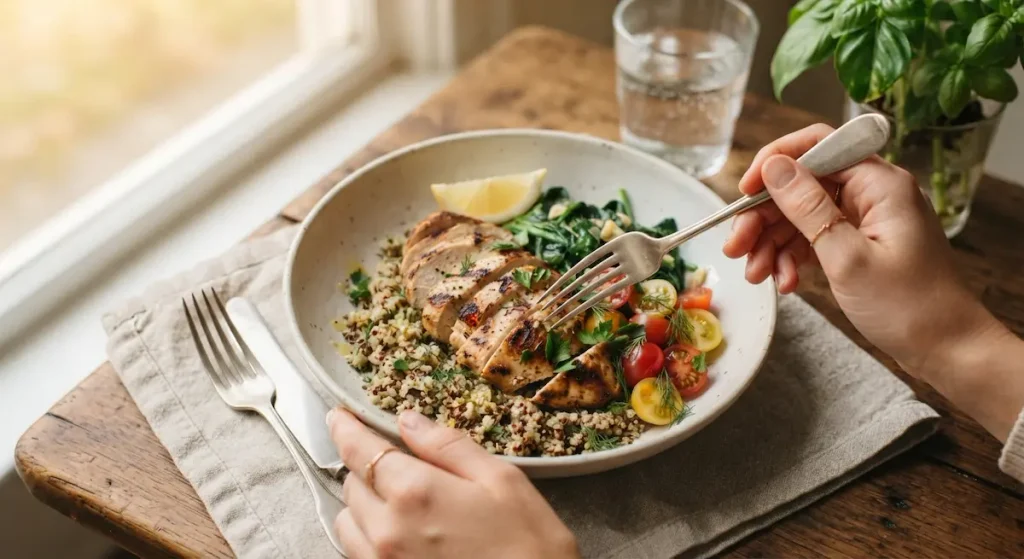
Skinless chicken breast has one of the best protein-to-fat ratios of any widely available meat. The American Liver Foundation and multiple clinical nutrition guidelines point to reducing saturated fat intake as a core strategy for anyone managing fatty liver — not because fat itself is the enemy, but because excess saturated fat specifically correlates with higher liver fat accumulation over time. Swapping fattier cuts for lean chicken in your regular rotation of chicken and quinoa recipes is a small, sustainable lever, not a drastic overhaul.
This is exactly why lean-protein chicken and quinoa recipes tend to outperform heavier meat-and-rice dishes on liver-focused meal plans.
Quinoa, Fiber, and the Gut-Liver Axis
Quinoa isn’t just “a grain that isn’t rice.” It’s a fiber-rich seed (technically a pseudocereal) that behaves differently in your digestive system than refined carbohydrates do. The soluble fiber slows glucose absorption, and slower glucose absorption means a gentler insulin response — which matters enormously if insulin resistance is part of what’s driving liver fat storage in the first place. This is also where the gut-liver axis comes back in: a healthier gut microbiome, supported by fiber intake, has been associated in PubMed-indexed research with lower markers of hepatic inflammation.
Olive Oil and Fat Quality, Not Just Fat Quantity
Why “how much fat” matters less than “what kind”
One of the more persistent myths in liver-health nutrition is that fat itself is the problem. It isn’t — fat quality is. Olive oil is predominantly monounsaturated fat, and some research has linked higher monounsaturated fat intake with more favorable liver enzyme profiles compared to diets heavy in saturated fat. That’s why this recipe leans on olive oil rather than butter or oils high in saturated fat — not to make the dish “diet food,” but because the fat you do include matters more than how sparingly you use it.
Herbs, Vegetables, and Low Glycemic Load
Fresh herbs, garlic, and non-starchy vegetables round out the dish without adding refined starch or excess sodium. Keeping the glycemic load low across the whole plate — not just the quinoa portion — supports the same blood-sugar stability that makes this a genuinely liver-conscious meal, not just a protein-and-grain bowl with a health claim stapled onto it.
The Recipe
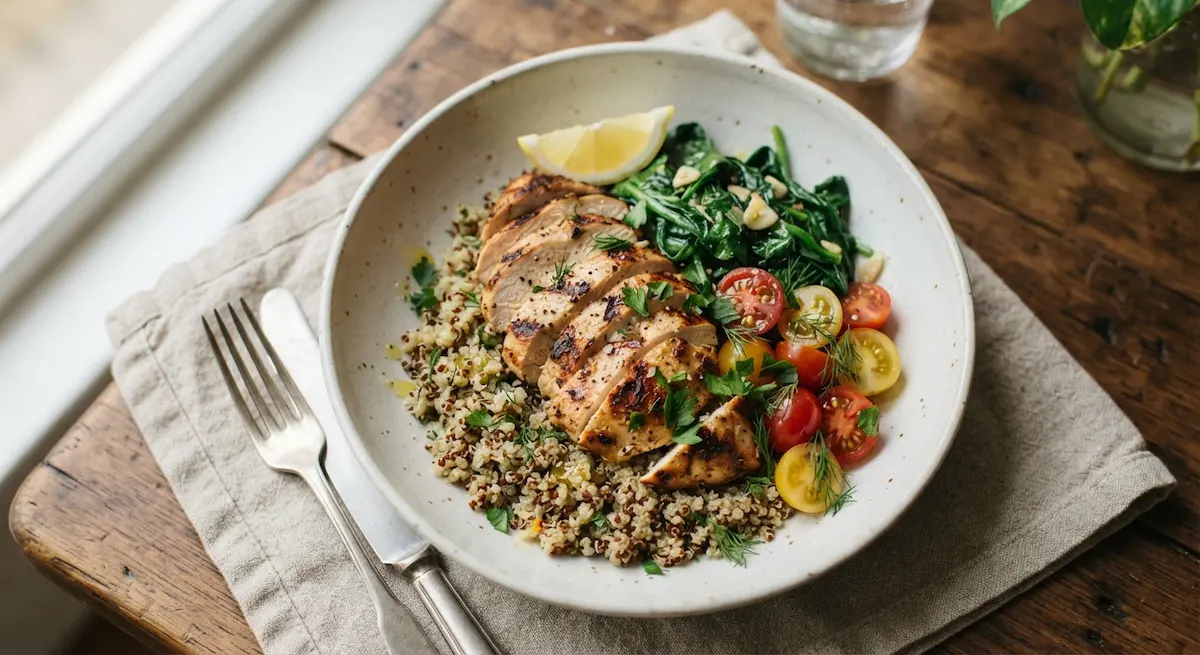
This particular chicken and quinoa recipes comes together in under 40 minutes, which matters, because the healthiest chicken and quinoa recipes are the ones you’ll actually make on a Tuesday night.
Ingredients
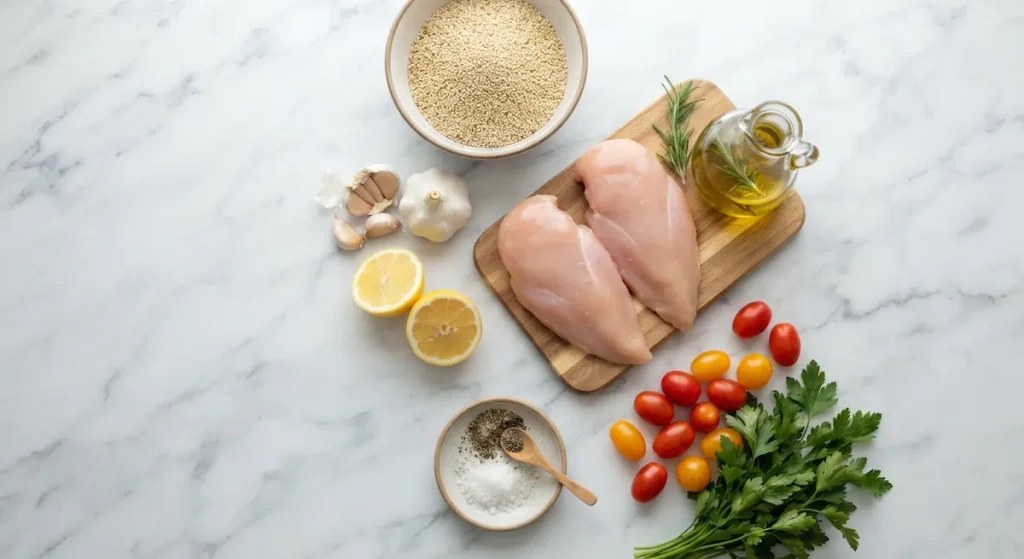
| Ingredient | Amount | Liver-Relevant Note |
| Skinless chicken breast | 1 lb (2 breasts) | Lean protein, low saturated fat |
| Quinoa (rinsed) | 1 cup, dry | Soluble fiber + complete amino acids |
| Extra-virgin olive oil | 2 tbsp | Primarily monounsaturated fat |
| Garlic, minced | 2 cloves | Flavor without added sodium |
| Lemon juice + zest | 1 lemon | Bright acidity, no added sugar |
| Mixed leafy greens (spinach or kale) | 2 cups | Fiber, micronutrients, low glycemic load |
| Cherry tomatoes, halved | 1 cup | Antioxidants, minimal impact on blood sugar |
| Fresh parsley or dill | 2 tbsp, chopped | Flavor, micronutrients |
| Salt and black pepper | To taste | Season lightly to keep sodium in check |
How to Make It
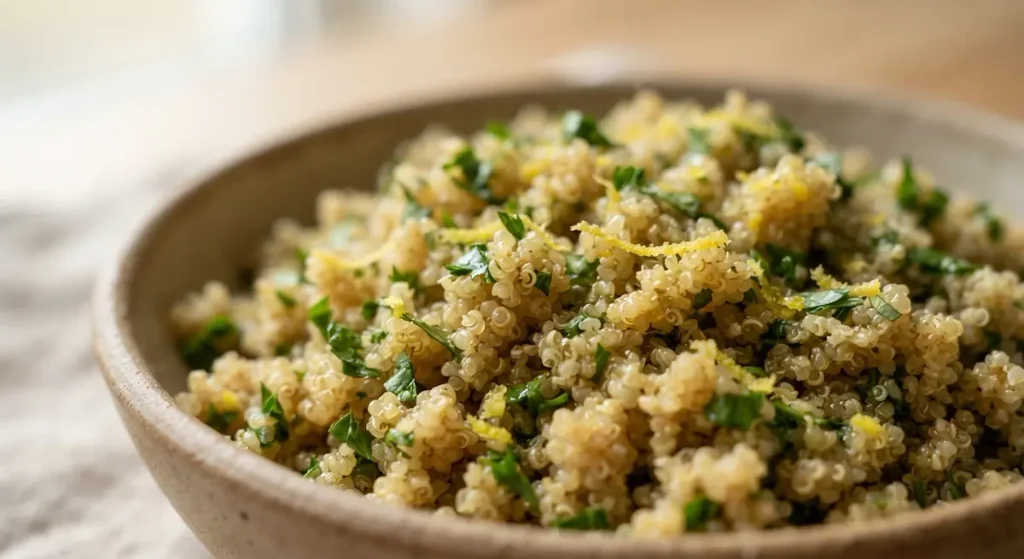
- Cook the quinoa. Combine rinsed quinoa with 2 cups of water in a saucepan, bring to a boil, then reduce heat and simmer covered for about 15 minutes, until the water is absorbed and the quinoa is fluffy.
- Season and cook the chicken. Pat the chicken breasts dry, season with salt, pepper, and half the minced garlic, then bake at 400°F for 20–22 minutes, or grill over medium-high heat for 6–7 minutes per side, until cooked through. Baking or grilling — rather than pan-frying in excess oil — keeps the saturated fat content low.
- Build the base. In a large bowl, toss the cooked quinoa with olive oil, lemon juice and zest, and the remaining garlic.
- Add the vegetables. Fold in the leafy greens and cherry tomatoes while the quinoa is still slightly warm, so the greens wilt just slightly.
- Slice and serve. Slice the chicken and lay it over the quinoa mixture. Finish with fresh herbs and a final light drizzle of olive oil.
This is the kind of dish that scales well too — double the batch, and you’ve got a liver-friendly lunch ready for the next two days, which is often the real difference between a recipe you skim once and one you keep coming back to.
Nutrition Facts (Per Serving, Serves 4)
Here’s the full nutritional breakdown for this chicken and quinoa recipes, per serving:
| Nutrient | Amount |
| Calories | ~410 kcal |
| Protein | 34 g |
| Carbohydrates | 32 g |
| Fiber | 5 g |
| Sugar | 2 g |
| Sodium | 320 mg |
| Saturated Fat | 2.5 g |
| Unsaturated Fat | 9 g |
Notice the saturated-to-unsaturated fat ratio here — that split is deliberate, and it’s the single detail that separates a liver-conscious recipe from a generic “healthy-sounding” one.
Which Diets This Recipe Fits
Because of how it’s built, this chicken and quinoa recipe fits neatly into several eating patterns:
- Low-sodium
- Diabetic-friendly
- Heart-healthy
- Anti-inflammatory
- High-protein
- Liver-friendly / NAFLD-conscious
- Low-saturated-fat
FAQ
Is chicken breast good for a fatty liver diet?
Yes, generally. Skinless chicken breast is one of the leaner protein sources available, and reducing saturated fat intake is a core, widely recommended strategy for managing fatty liver, according to guidance from organizations like Mayo Clinic and the American Liver Foundation.
Does eating quinoa help lower liver enzymes?
This is where nuance matters. Quinoa doesn’t directly “lower” liver enzymes the way a medication would, and it’s a myth worth correcting. What the evidence actually supports is more indirect: quinoa’s fiber content helps improve insulin sensitivity and supports a healthier gut microbiome, both of which are associated with lower hepatic inflammation over time. It’s a supportive dietary pattern, not a quick fix.
How often can I eat chicken and quinoa recipes if I have NAFLD/MASLD?
Most dietary guidance for fatty liver doesn’t restrict specific foods so much as it emphasizes overall pattern — lean protein, fiber-rich carbohydrates, and unsaturated fats as regular staples. A dish like this one can reasonably be part of a rotating weekly meal plan rather than an occasional treat.
Will this recipe alone improve my liver enzyme numbers?
No single meal will. Liver health responds to sustained dietary patterns over weeks and months, not one dinner. Think of this recipe as one repeatable building block, not a standalone fix.
A Note Before You Dig In
This article is meant for general education and isn’t a stand-in for personalized medical advice . If you have diagnosed liver disease, elevated liver enzymes, or any other liver condition, please talk with your healthcare provider before making significant dietary changes.
Conclusion
Your liver doesn’t ask for much attention, and that’s exactly the problem — it just keeps the books, meal after meal, without ever flagging the small overspends until they add up. Recipes like this chicken and quinoa bowl aren’t about perfection or restriction; they’re about giving your liver fewer things to quietly log against you. Lean protein, real fiber, good fats, low sodium — none of it dramatic, all of it cumulative.
If you’ve been searching for chicken and quinoa recipes that do more than just taste good — ones that are actually thought through with your liver in mind —I hope this one becomes a regular in your dinner lineup.
Made this recipe? I’d genuinely love to hear how it turned out — drop a comment below, or share a photo if you post it anywhere. And if recipes like this one are helpful, consider joining the DocCuisine newsletter — new Organ Health recipes, including more liver-friendly dishes, show up there first.
What Readers Think :
There are no reviews yet. Be the first one to write one.