
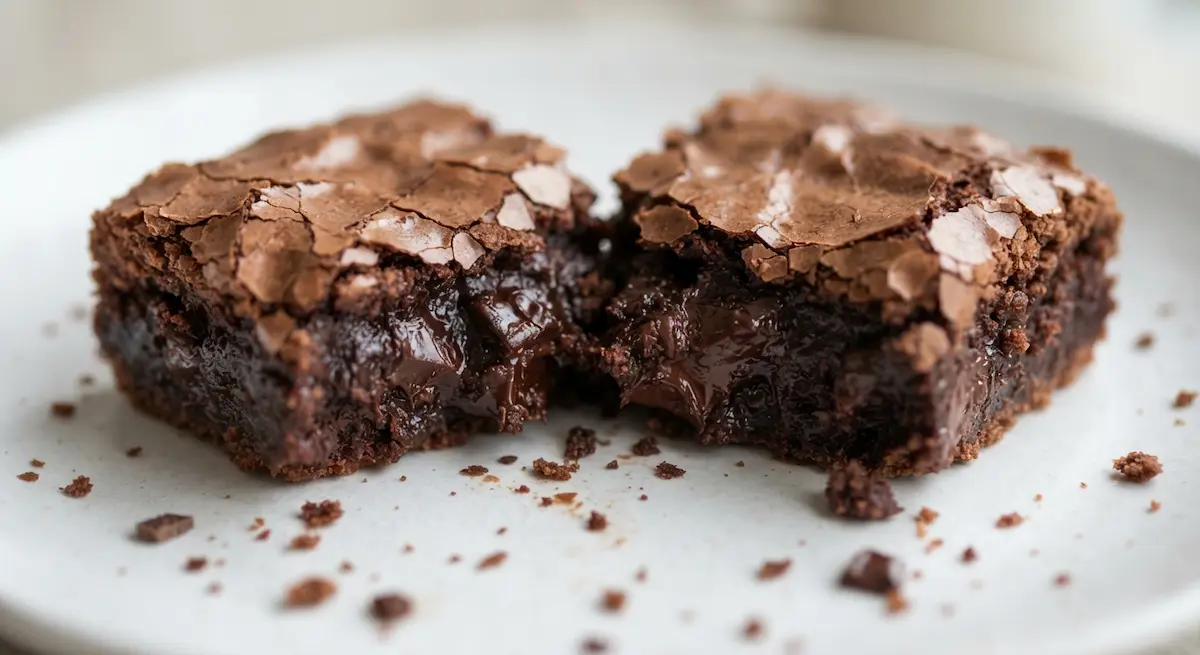
Healthy Brownie Recipe: A Lower-Sugar Dessert
The question always comes last. By the end of a new-diagnosis visit, we’ve covered A1c targets, medications, and what a good fasting number looks like. Then the patient looks up and asks, almost apologetically, whether they’ll ever be allowed a brownie again.
It’s rarely about the chocolate. It’s about whether an ordinary pleasure survives the diagnosis. My answer is yes, provided you understand what a brownie does inside your body after you eat it. That idea is the backbone of this healthy brownie recipe: fudgy, deeply chocolatey, and designed around how blood sugar behaves rather than around a list of forbidden foods.
Below you’ll find the medical reasoning, a simple two-hour test for learning your own response, the full recipe, and the numbers for each square. Food first, medicine second. Dessert doesn’t have to be the casualty.
Table of Contents
Doctor’s Note: What a Brownie Does to a Glucose Curve
A classic brownie is refined flour and refined sugar bound with butter. Both digest quickly, so glucose enters your bloodstream in a rush. With insulin resistance or type 2 diabetes, your body clears that glucose more slowly, which means a higher peak and a longer stay above your target range.
This healthy brownie recipe changes three things, in order of impact:
- It removes most of the starch. Almond flour replaces wheat flour, and that swap does more for your glucose curve than any single “superfood.”
- It slows the stomach. Fat and protein delay gastric emptying, so glucose arrives as a trickle rather than a flood.
- It shrinks the carbohydrate load per square. Portion size is the most reliable lever you have.
It’s a better dessert, not a free food.
The American Diabetes Association’s position supports this approach: people with diabetes can include sweets in an overall eating plan, and total carbohydrate is the main factor driving post-meal glucose. Note that the ADA frames this as fitting a treat into a plan. It doesn’t say sweets are harmless.
The Two-Hour Test: Eat One Square and Learn Something

Every brownie is a two-hour story: a beginning, a rise, and a landing. Your job is to shape the ending, and the only way to know how it ends for you is to look.
Post-meal glucose is personal. The same square can land differently in two people, or in you on two different days, depending on sleep, stress, and what else was on your plate. If you monitor your glucose, here’s a simple experiment:
- Check before you eat. This is your starting line.
- Eat one square after a balanced meal, not on an empty stomach.
- Check again one to two hours after your first bite. For many adults with diabetes, the ADA’s general post-meal target is a peak below 180 mg/dL at that window. Your care team may set a different number for you, and theirs is the one that counts.
- Write down what else you ate. Context turns a number into information.
A ten-to-fifteen-minute walk afterward tends to help muscles pull glucose out of the blood, which is one of the cheapest interventions in medicine.
A note for readers with type 1 diabetes: high-fat foods can delay the glucose rise and stretch it out over several hours, which affects insulin timing. Talk to your care team before deciding how to dose for a fat-rich dessert.
Anatomy of a Brownie Built Around Blood Sugar
The Sweetener Math
Dates: Whole Food, Still Concentrated
Dates are roughly two-thirds sugar by weight. The fiber that comes with them helps, but the carbohydrate is real. So don’t stop at calling this healthy brownie recipe “naturally sweetened.” Count the grams. This batch uses about 130 g of pitted dates across 16 squares, which works out to a little over 8 g of date per square.
Ripe Banana: A Sweetness Dial
The riper the banana, the more free sugar it holds, which is why an old, spotted banana tastes sweeter. If you swap it in, choose one that’s yellow with only a few freckles and keep the amount modest.
Non-Nutritive Sweeteners
Monk fruit and allulose blends add little glucose impact. Erythritol needs a word of caution: a 2023 study in Nature Medicine linked higher blood erythritol levels with cardiovascular events. The study was observational, backed by short-term lab work, and the question is still open. It’s a reason for moderation, not alarm. This recipe leaves sugar substitutes out, and you can decide whether to add them.
Flour That Isn’t Flour
A quarter cup of all-purpose flour carries around 22 g of carbohydrate and less than 1 g of fiber. The same volume of almond flour has roughly 5 to 6 g of carbohydrate and about 3 g of fiber. Confirm the exact numbers for your brand in USDA FoodData Central.
Much of almond fiber is the insoluble kind, so its real advantage is the starch it replaces, plus the fat and protein it adds. Small controlled studies of almonds eaten alongside carbohydrate found lower post-meal glucose, which fits that reasoning.
There’s also a baking reason to care. Without gluten, structure comes from fat and protein setting as the brownie cools, which is why patience matters in the method below.
Cocoa: Why the Label Matters
Reviews of cocoa flavanol trials suggest modest improvements in markers of insulin resistance. Most of those trials were short, and the flavanol doses were often higher than a brownie square delivers. So treat cocoa as a bonus, not a treatment.
Here’s where medicine and baking meet. Dutch-processed (alkalized) cocoa loses a large share of its flavanols. Natural cocoa keeps more, and its acidity reacts with baking soda to give the brownies lift. One label choice serves both goals.
Fat as a Brake Pedal
Almond butter, eggs, and dark chocolate all contribute fat that slows digestion. That’s useful for your glucose curve, but it also makes these brownies calorie-dense, which is one more reason the portion is doing so much of the work.
The Shopping List, With a Glucose Job for Every Line

Everything in this healthy brownie recipe earns its place. Makes 16 squares in an 8-inch pan.
| Ingredient | Amount | Its job for blood sugar |
| Almond flour | 1½ cups (144 g) | Replaces starch; adds fat, protein, fiber |
| Natural unsweetened cocoa powder | ½ cup (43 g) | Flavanols, minimal sugar |
| Medjool dates, pitted | 6 (about 130 g) | Sweetness with fiber, counted carefully |
| Large eggs | 3 | Protein, structure, satiety |
| Unsweetened almond butter | ⅓ cup (85 g) | Fat that slows digestion |
| Dark chocolate, 70% or higher, chopped | ⅓ cup (55 g) | Lower sugar per gram than milk chocolate |
| Vanilla extract | 1 tsp | Flavor |
| Baking soda | ½ tsp | Lift (reacts with natural cocoa) |
| Fine salt | ¼ tsp | Sharpens the chocolate |
How to Make This Healthy Brownie Recipe: Ten Minutes of Work, Thirty of Waiting
- Heat the oven to 350°F (175°C) and line an 8-inch square pan with parchment.
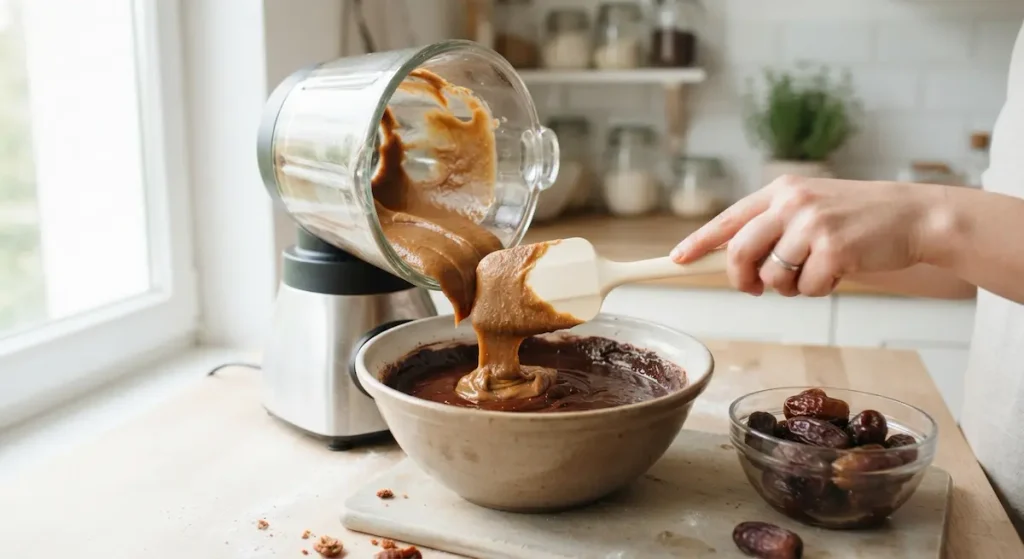
- Soften the dates. Soak them in ½ cup hot water for 10 minutes, then blend with ¼ cup of the soaking water until completely smooth. A smooth paste spreads sweetness evenly; leftover date skin makes gritty flecks.
- Add the eggs, almond butter, and vanilla to the blender and mix until glossy.
- Whisk the almond flour, cocoa, baking soda, and salt in a bowl, then fold in the wet mixture.
- Fold in most of the chopped chocolate, saving a small handful for the top.
- Spread and bake for 22 to 26 minutes, until the edges are set and the center looks barely done. A toothpick should come out with a few moist crumbs.
- Cool completely in the pan, at least an hour. The structure forms as the fats firm up, and cutting early gives you pudding.
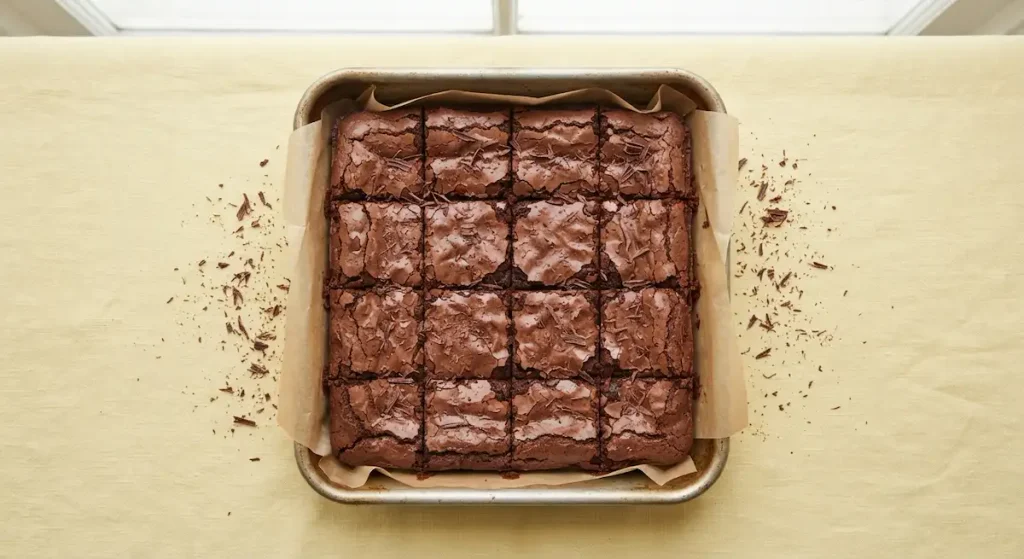
- Cut into a 4 × 4 grid. Equal squares make the nutrition numbers true.
When the Batter Misbehaves
- Greasy or separated: Stir your almond butter well before measuring, and pull the pan as soon as the center sets.
- Dense and gummy: Usually underbaking or too much date paste. Weigh the dates rather than counting them.
- Dry and crumbly: Overbaked. Start checking at 22 minutes.
The Numbers Behind One Square
These are estimates based on typical USDA FoodData Central values for each ingredient. Recalculate with your own brands for accuracy, especially for the chocolate.
| Nutrient | Per square (1 of 16) |
| Calories | about 150 |
| Protein | about 5 g |
| Total carbohydrate | about 12 g |
| Fiber | about 3 g |
| Net carbs (total minus fiber) | about 8–9 g |
| Total sugars | about 7 g |
| Added sugars | about 1 g |
| Sodium | about 90 mg |
Net carbs is a handy shorthand, but many diabetes meal plans count total carbohydrate, so follow whichever your care team uses. Most of the sugar here comes from dates and their fiber-carrying fruit matrix, which is why the “added sugars” line stays so low.
Who This Brownie Suits
This healthy brownie recipe fits several eating patterns:
- Diabetes-friendly and blood sugar-conscious
- Low-sugar
- Low-sodium
- Heart-healthy, thanks to unsaturated fats from nuts
- Higher-protein than a classic brownie
- Gluten-free-adaptable. Almond flour is naturally gluten-free, but if you have celiac disease, check that your cocoa and chocolate are certified gluten-free.
Four Swaps and Which Way the Carbs Move
| Swap | Effect on carbs | Effect on texture |
| ¼ cup pureed black beans in place of ¼ cup almond flour | Slightly higher carbs, more fiber | Denser, fudgier |
| Chopped walnuts or pecans stirred in | Almost unchanged | More crunch, more fat |
| 1 tsp espresso powder | None | Deeper chocolate flavor |
| Dairy-free chocolate | Depends on brand | Similar |
Cut Them Before You Freeze Them
Wrap individual squares and freeze them, and this healthy brownie recipe becomes portion control you set up once, while you’re calm, instead of a decision you make at 9 p.m. with a full pan on the counter. Squares keep for three to four days in an airtight container in the fridge, and up to three months in the freezer. Thaw one at room temperature for about 20 minutes, or warm it briefly for a softer center.
Questions People Ask Me at the Kitchen Counter
Can diabetics eat brownies?
Usually, yes, as part of an overall plan. Portion size, carbohydrate quality, and your personal glucose response decide it. The ADA supports fitting sweets into a meal plan rather than banning them.
Does sugar-free mean a brownie won’t spike blood sugar?
No. Refined flour is still carbohydrate, and it breaks down into glucose whether or not sugar appears on the label. Look at total carbohydrate, not just the sugar line.
Aren’t dates just sugar?
They’re mostly sugar, with fiber alongside. That’s why this recipe measures them by weight instead of calling them “free.”
Is this healthy brownie recipe safe for type 1 diabetes?
It can fit, but the fat content may delay the glucose rise, which changes insulin timing. Work out the details with your care team.
Can I use a different sweetener?
Yes. Monk fruit or allulose blends lower the carbohydrate count, but they change texture and flavor, and individual tolerance varies.
A Note on What This Article Is and Isn’t
This article is general information, not medical advice. If you have diabetes, prediabetes, or another blood sugar condition, talk with your healthcare provider or registered dietitian before changing your diet or medication.
Conclusion

Go back to the patient who asked about dessert last. The honest answer was never “eat whatever” or “never again.” It was “learn how it lands.”
That’s the whole method behind this healthy brownie recipe. Replace starch with almond flour. Respect the sweetener math and weigh your dates. Run the two-hour test once so you know your own curve. A diagnosis changes the rules of the kitchen, but it doesn’t close it. Bake a batch, cut it into sixteen, freeze most of them, and enjoy one on purpose. Food first, medicine second.
What Readers Think :
There are no reviews yet. Be the first one to write one.
