Fatty Liver Recipes: Turmeric & Garlic Baked Salmon with Roasted Cruciferous Veggies
Table of Contents
I found out my liver wasn’t happy with me on a Tuesday, between two lectures, reading a lab printout I wasn’t emotionally prepared for.
My ALT was 61. My AST wasn’t far behind. For context — as a med student, I’d flagged those exact numbers on other people’s charts a dozen times without a second thought. Seeing them next to my own name felt different. There’s a strange kind of vertigo that happens when the clinical becomes personal: you know the pathophysiology cold, and none of that knowledge softens the moment your own body hands you the data.
My doctor wasn’t alarmed. No fibrosis on imaging, no alcohol history to explain it, nothing acute. Just a liver quietly storing more fat than it should — the textbook picture of non-alcoholic fatty liver disease, sitting on my own chart. She didn’t reach for a prescription pad. She asked what I usually ate for dinner. That question sent me looking for fatty liver recipes that weren’t sad, weren’t bland, and weren’t built around deprivation — because if I was going to fix this, I needed food I’d actually want to eat on a Tuesday night after a 12-hour shift.
The liver doesn’t ask for punishment. It asks for less.
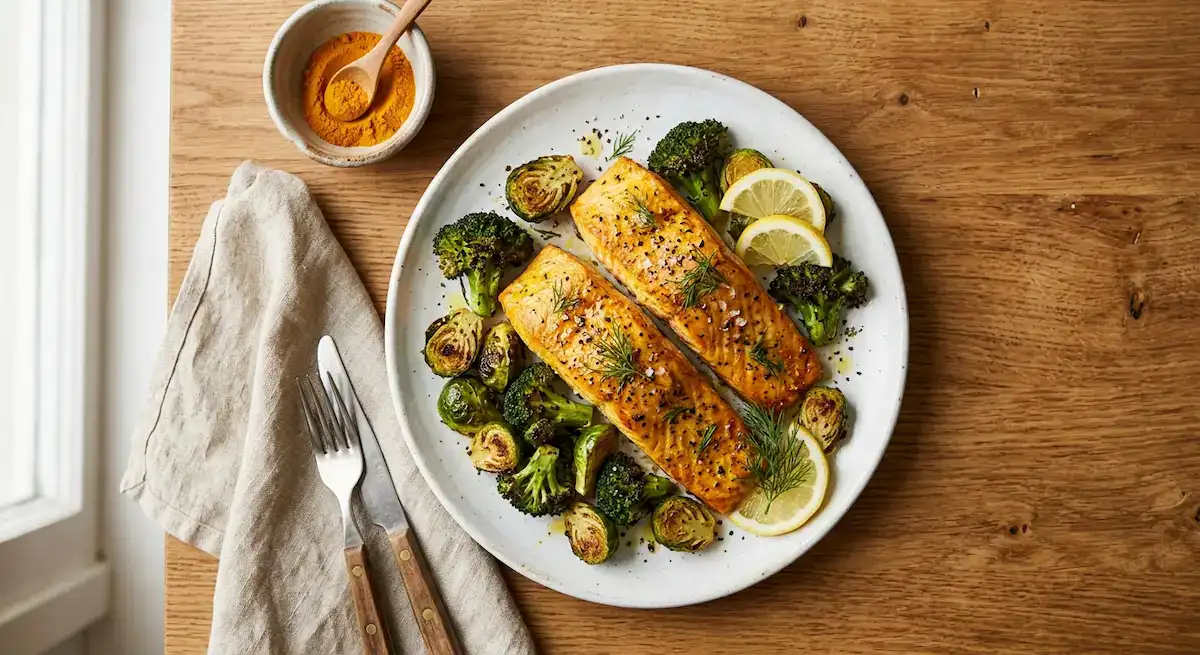
This dish — turmeric and garlic baked salmon with roasted cruciferous vegetables — is one of the first fatty liver recipes I built out of that search, and it’s stayed in rotation ever since. Food first, medicine second. Let’s get into why it works.
The Doctor’s Note: What’s Actually Happening in a Fatty Liver
Here’s the plain-language version of what I already knew clinically but hadn’t fully felt until it was mine: non-alcoholic fatty liver disease, or NAFLD, happens when liver cells (hepatocytes) accumulate triglycerides beyond roughly 5% of the liver’s total weight. That fat doesn’t arrive because you ate one greasy meal. It builds up slowly, usually through a combination of excess refined carbohydrate and added sugar intake — which the liver converts into fat through a process called de novo lipogenesis — and insulin resistance, which makes it harder for the liver to export the fat it’s already storing.
NAFLD is common enough that it’s worth saying plainly: several large U.S. population studies, including analyses of National Health and Nutrition Examination Survey (NHANES) data, have estimated that roughly one in four American adults has some degree of hepatic steatosis, with figures in various cohorts ranging from about 19% to over 30% depending on how it’s measured. It’s genuinely one of the most common liver findings in modern medicine, and most people who have it never feel a single symptom.
There’s an important distinction worth making here, because it changes how seriously to take a diagnosis: plain NAFLD (fat without significant inflammation) is different from NASH — non-alcoholic steatohepatitis — where inflammation and early scarring (fibrosis) enter the picture. Diet matters at both stages, but it matters most before you cross into NASH territory, which is exactly why “quietly elevated ALT” is worth acting on rather than shrugging off.
And here’s the part that made this whole search feel less overwhelming: according to guidance from the Mayo Clinic and the American Association for the Study of Liver Diseases (AASLD), diet — not supplements, not detox teas — is the first-line intervention for NAFLD. Sustained weight loss in the range of 7–10% of body weight, achieved through reduced saturated fat and added sugar intake, shows the most consistent evidence for actually reducing liver fat. That’s a food problem with a food answer, which is exactly the kind of fatty liver recipes I went looking for.
One more thing before we get to the plate: your liver already detoxifies constantly, through a two-phase enzymatic process (cytochrome P450 reactions in Phase I, conjugation reactions in Phase II) that runs whether or not you drink a green juice. Nothing you eat “flushes” it in an afternoon. But certain foods genuinely support how well those pathways run — more on that shortly, because it’s central to why cruciferous vegetables earned a permanent spot in this recipe.
Why This Particular Plate: The Clinical Logic Behind the Ingredients
The best fatty liver recipes aren’t built on guesswork — every ingredient here is doing a specific job. I didn’t pick these ingredients because they’re trendy. Each one earns its place for a specific, explainable reason — think of this less like a benefits list and more like a set of consult notes.
Turmeric and the Curcumin Question
Turmeric’s active compound, curcumin, has been studied for its anti-inflammatory action, largely through its effect on inflammatory signaling pathways like NF-κB. That’s relevant here because low-grade systemic inflammation is part of what pushes simple fatty liver toward the more damaging NASH picture.
The honest caveat, and it matters: curcumin on its own is poorly absorbed. A well-known pharmacokinetic study found that pairing curcumin with piperine — the compound in black pepper — meaningfully increases how much of it your body actually takes up, largely by slowing how quickly your liver and intestines metabolize it. That’s not a marketing gimmick; it’s the actual mechanism, and it’s the reason this recipe pairs turmeric with both black pepper and olive oil (curcumin is fat-soluble, so a source of fat helps it absorb, too). Skip the pepper, and you’re mostly seasoning your salmon for flavor rather than function.
Garlic and Hepatic Fat: What the Evidence Actually Shows
Garlic’s sulfur compounds, particularly allicin, have reasonably solid evidence for improving lipid profiles — modestly lowering LDL cholesterol and triglycerides in several clinical studies. The evidence specifically tying garlic to reduced liver fat is more preliminary than the lipid data, so I want to be honest rather than overselling it: garlic is a reasonable, low-risk addition with real cardiometabolic support, not a proven liver-fat eraser on its own.
Salmon as a Structural Ingredient, Not Just “Healthy Fat”
It’s easy to wave at salmon and say “omega-3s, good for you” and move on. Here’s the more specific mechanism: the long-chain omega-3 fatty acids EPA and DHA appear to reduce hepatic triglyceride synthesis and support how the liver exports fat as VLDL particles, according to research summarized by the NIH Office of Dietary Supplements. That’s a direct, plausible pathway for why fatty fish shows up in nearly every serious NAFLD-friendly diet, not just a vague “fish is healthy” claim — which is the kind of specificity worth expecting from any serious fatty liver recipes.
Practically: wild-caught salmon tends to carry a slightly different fat profile than farmed, though both provide meaningful omega-3s. If you’re buying pre-seasoned or smoked fillets, check the sodium — plain fillets you season yourself give you far more control.
Cruciferous Vegetables: Sulforaphane and Phase II Detox Enzymes
This is the legitimate “liver detox foods” story, and it’s worth separating from the marketing noise. Broccoli and Brussels sprouts contain glucosinolates that convert to sulforaphane, a compound with research support for upregulating Phase II detoxification enzymes, including glutathione-S-transferase — one of the actual enzyme systems your liver uses to neutralize and clear compounds. That’s a real, mechanistic version of “liver support,” distinct from anything sold as a 24-hour detox cleanse.
Think of your liver as a 24/7 metabolic filtration factory. It never clocks out. Cruciferous vegetables don’t give it a day off — they give it better tools to keep running the shift.
Biochemical Synergy on Your Plate: Building the Recipe
Here’s why this dish is more than the sum of its parts: fat-soluble curcumin, paired with piperine and olive oil for absorption, cooked alongside omega-3-rich salmon and sulforaphane-generating cruciferous vegetables, isn’t four separate “healthy” ingredients plated next to each other. It’s a small stack of mechanisms working in the same direction on the same organ, at the same meal. That’s the actual design logic behind good fatty liver recipes — not just “avoid bad foods,” but actively assembling ingredients that support the pathways under strain.
Ingredients
Here’s everything you’ll need — a short list, which is typical of good fatty liver recipes: a handful of ingredients doing real metabolic work, not a pantry’s worth of add-ons.

| Ingredient | Amount | Liver-Relevant Note |
|---|---|---|
| Salmon fillets | 2 (6 oz each) | Primary source of EPA/DHA omega-3s |
| Turmeric, ground | 1 tsp | Anti-inflammatory curcumin |
| Garlic, minced | 3 cloves | Allicin, supports lipid profile |
| Black pepper, ground | 1/4 tsp | Piperine boosts curcumin absorption |
| Extra-virgin olive oil | 2 tbsp | Monounsaturated fat aids curcumin uptake |
| Broccoli florets | 2 cups | Sulforaphane precursor |
| Brussels sprouts, halved | 1 cup | Sulforaphane precursor |
| Lemon | 1, sliced | Brightness and acidity without added sodium |
| Low-sodium seasoning blend or fresh herbs | To taste | Keeps sodium in check |
Preparation Steps
- Preheat your oven to 400°F (204°C). A moderate roasting temperature browns the vegetables without pushing into the high-heat char that generates advanced glycation end-products (AGEs) — worth avoiding when you’re already managing inflammation.
- Pat the salmon fillets dry and place them on one side of a parchment-lined baking sheet.
- In a small bowl, whisk together the olive oil, minced garlic, turmeric, and black pepper. Brush generously over the salmon.
- Toss the broccoli and Brussels sprouts in the remaining oil mixture and spread them on the other side of the sheet, cut-side down for better browning.
- Tuck lemon slices around the salmon.
- Roast for 15–18 minutes, until the salmon flakes easily with a fork and the vegetables are tender with lightly browned edges.
- Season lightly with your low-sodium blend or fresh herbs just before serving.
Prep time: 10 minutes | Cook time: 18 minutes | Total time: 28 minutes | Yield: 2 servings
Nutrition Facts (Per Serving)
| Nutrient | Amount per Serving |
|---|---|
| Calories | ~420 kcal |
| Protein | ~38 g |
| Carbohydrates | ~14 g |
| Fiber | ~5 g |
| Sugar | ~3 g |
| Sodium | ~180 mg (using no added salt) |
Values are estimates based on standard ingredient measurements; exact figures will vary with specific brands and portion sizes.
Which Diets This Plate Fits
Because this is one of those fatty liver recipes built around whole foods rather than restriction, it happens to check several other dietary boxes too:
- Low-sodium — built around herbs, garlic, and citrus instead of salt, with sodium staying well under typical single-meal thresholds.
- Diabetic-friendly — low overall carbohydrate load with minimal added sugar, so it shouldn’t spike blood glucose sharply.
- Heart-healthy — the fat profile leans monounsaturated and omega-3, aligning with American Heart Association guidance on healthy fats.
- Anti-inflammatory — curcumin, allicin, and sulforaphane are all compounds studied for anti-inflammatory or antioxidant support.
- Mediterranean diet-aligned — fatty fish, olive oil, vegetables, and minimal processed ingredients are the backbone of the Mediterranean pattern, which has some of the strongest dietary evidence specifically for NAFLD.
Where This Fits Into a Bigger Picture
I want to be straight with you: one dinner, however well-engineered, will not reverse hepatic steatosis. Nobody’s liver responds to a single good meal the way a headache responds to ibuprofen.
What the evidence actually supports is consistency — the same anti-inflammatory, lower-sugar, higher-fiber eating pattern repeated across days and weeks, not a single virtuous plate.
That’s really the honest framing behind any “1 week detox diet plan” search, too. The phrase implies a fast fix; the biology rewards a repeated pattern. This turmeric-garlic salmon works well as an anchor — something you could realistically build two or three dinners a week around, rotating the vegetables and swapping in other fatty fish like trout or sardines.
If you’re piecing together a fuller week of fatty liver recipes rather than a single dish, that’s the direction to build in: a small, repeatable core, not a dramatic seven-day overhaul you can’t sustain on day nine.
Food first, medicine second — and food, done consistently, is medicine.
FAQ
Are Fatty Liver Recipes Actually Different From Normal Healthy Recipes?
Mostly, they overlap heavily with general heart-healthy, anti-inflammatory eating — lean protein, vegetables, healthy fats, limited added sugar. What sets dedicated fatty liver recipes apart is a sharper focus on minimizing added sugar and refined carbohydrates specifically (since those drive de novo lipogenesis in the liver) and leaning into compounds like sulforaphane and omega-3s that have more direct liver-relevant mechanisms.
What Foods Should I Avoid Completely With a Fatty Liver?
“Completely avoid” is rarely necessary or realistic. The foods most consistently linked to worsening NAFLD are added sugars (especially high-fructose corn syrup in sugary drinks), refined carbohydrates, and excess alcohol. Cutting these back sharply — rather than eliminating every carbohydrate — is what the evidence actually supports. That’s also why most fatty liver recipes lean on herbs, citrus, and spice for flavor instead of sugar and salt.
Do Juice Cleanses or “Liver Detox” Fasts Actually Help NAFLD?
This is the myth worth retiring. Your liver runs its own detoxification pathways continuously through Phase I and Phase II enzyme systems — a juice fast doesn’t accelerate that process, and extreme short-term fasting can actually stress metabolism rather than help it. Both the Mayo Clinic and NIH consumer health resources are consistent on this: there’s no clinical evidence that commercial detox products or juice cleanses reduce liver fat, while whole-food, fiber-rich, lower-sugar eating patterns have actual supporting data. If a product promises to “flush toxins” from your liver in three days, that’s marketing language, not physiology.
How Quickly Can Diet Changes Improve Liver Enzyme Levels?
This varies by individual, but some people see meaningful improvement in liver enzymes within a few weeks to a couple of months of sustained dietary change, particularly alongside modest weight loss. It’s not instant, and it’s not linear — but it’s also not a years-long wait for the first signs of progress.
Is This Recipe Safe for Someone With Diabetes or High Blood Pressure?
The macronutrient and sodium profile here is generally friendly to both conditions, but “generally friendly” isn’t the same as personalized advice. If you’re managing diabetes or hypertension, run any significant dietary change past your physician or a registered dietitian who knows your specific labs and medications.
A Quick, Honest Disclaimer
This article — like the other fatty liver recipes on DocCuisine — is intended for general nutrition information and education, not personalized medical advice. Elevated liver enzymes and a NAFLD or NASH diagnosis require proper evaluation — bloodwork, imaging, and sometimes further testing — from a qualified healthcare provider. If you’ve had abnormal liver labs or are managing a diagnosed liver condition, please talk to your doctor or a registered dietitian before making significant changes to your diet.
Conclusion

I still think about that Tuesday afternoon and the printout that started all of this. What changed things wasn’t a supplement or a cleanse — it was building a small, repeatable set of fatty liver recipes I actually looked forward to eating, this turmeric-garlic salmon chief among them. The liver is forgiving in a way a lot of organs aren’t; give it less sugar, more fiber, more of the right fats, and it tends to respond. Not overnight, but reliably.
If you’re staring down your own version of that lab printout, start here: one plate, cooked with a little bit of biochemical intention, on a Tuesday night that doesn’t have to feel like punishment.
Tried this recipe? I’d genuinely love to hear how it turned out — drop a comment below, or share a photo if you make it your own. And if you want more fatty liver recipes and evidence-based nutrition breakdowns like this one delivered straight to your inbox, subscribe to the DocCuisine newsletter.
Food first, medicine second — let’s keep building that plate together.
What Readers Think :
There are no reviews yet. Be the first one to write one.