Mediterranean Salmon Recipe: A Simple, Nutritious Dinner
A hepatologist-in-training’s take on omega-3s, olive oil, and the quiet math of a healthier liver
There’s a specific kind of quiet that fills a room when someone reads their own labs out loud for the first time. Not gasping. Not crying. Just quiet. I remember standing next to a relative who’d gone in for a routine physical and come out with the words “fatty liver” attached to her chart — no pain, no symptoms, nothing she’d have noticed on her own. She looked fine. She felt fine. And that’s exactly the problem with liver disease: it doesn’t announce itself until the numbers do.
That moment is why I keep coming back to this mediterranean salmon recipe on DocCuisine. It’s not a miracle food, and I’m not going to pretend one dinner can undo years of dietary patterns. But this dish sits at the intersection of “things that taste like a treat” and “things your liver is quietly grateful for” — and that intersection is smaller than most food blogs let on.
Think of your liver as the body’s unpaid accountant. It reconciles every meal, every drink, every stray calorie, silently, in the background, without so much as a thank-you note. Most of the time, it balances the books without complaint. But when too much saturated fat, too much sugar, and too little movement keep adding up, the books stop reconciling. That’s when non-alcoholic fatty liver disease (NAFLD), now more often called MASLD (metabolic dysfunction-associated steatotic liver disease), starts to take root. This mediterranean salmon recipe won’t fire your accountant. It just gives them a cleaner set of numbers to work with.
Table of Contents
Doctor’s Note: What Earns This Dish a Spot on the Liver-Friendly List
I get asked, fairly often, why a salmon dinner belongs in a category about liver health rather than just “heart health” or “general wellness.” The honest answer is that the liver has its own, more specific stakes in this recipe — and three ingredients in particular are doing real metabolic work.
Omega-3s and hepatic fat
Salmon is rich in EPA and DHA, the long-chain omega-3 fats that have been studied specifically in NAFLD populations. A 2024 systematic review and meta-analysis pooling data across NAFLD patients found that omega-3 supplementation significantly decreased liver enzymes — both ALT and AST — along with improvements in triglycerides and cholesterol. Separately, a randomized controlled trial using MRI-based liver fat measurement found that omega-3 fatty acids meaningfully reduced liver fat content compared with placebo, with the effect most pronounced in people who already had hepatic steatosis. That’s the mechanism in a sentence: omega-3s appear to help the liver export fat rather than store it.
Monounsaturated fat and enzyme levels
Olive oil isn’t just a cooking medium in this mediterranean salmon recipe — it’s a second liver-specific ingredient. Research on the Mediterranean dietary pattern, where olive oil supplies the majority of dietary fat, has repeatedly linked it to lower rates of hepatic steatosis. One mechanistic review noted that an olive-oil-rich diet decreases triglyceride accumulation in the liver and improves insulin resistance, partly by reducing inflammatory signaling. Newer clinical work echoes this: a recent review of extra virgin olive oil in MASLD found that EVOO supplementation within a Mediterranean-style diet reduced hepatic steatosis and improved markers of inflammation and oxidative stress. Fat quality, not just fat quantity, is doing the heavy lifting here.
Polyphenols and oxidative stress
Olives, garlic, and fresh herbs bring polyphenols to the plate — plant compounds with antioxidant activity that researchers believe help protect hepatocytes (liver cells) from oxidative damage, one of the quieter drivers of hepatic inflammation. A systematic review of the Mediterranean diet’s role in NAFLD management specifically credited the diet’s plant-based, polyphenol-rich foundation with antioxidant and anti-inflammatory effects that help prevent oxidative stress damage in the liver.
None of that means this single mediterranean salmon recipe will move your labs by next Tuesday. But it does mean the ingredients on your cutting board aren’t incidental to the “liver-friendly” label — they’re the reason for it.
The Ingredients, Read Like a Liver Panel
If you’ve ever looked at a liver panel and had no idea what any of the numbers meant, this section is the food version of that same conversation — ingredient by ingredient.
- Salmon — the omega-3 engine of this mediterranean salmon recipe. Beyond EPA and DHA, salmon also contains selenium, a mineral researchers have linked to reduced vulnerability to liver damage from oxidative and toxic stressors.
- Extra-virgin olive oil — your MUFA and polyphenol source, doing double duty as both cooking fat and active ingredient.
- Olives — extra polyphenols, though worth watching if you’re managing sodium alongside liver health (more on that below).
- Garlic — commonly cited in traditional and emerging research for supporting lipid metabolism; the evidence here is promising but not as robust as the omega-3 and olive oil data, so I’d call it a supporting player, not a headline act.
- Lemon and fresh herbs (oregano, rosemary, parsley) — additional antioxidants, and a genuinely useful trick for building flavor without leaning on salt.
A note on portion, not just ingredients
Even a liver-friendly ingredient list doesn’t cancel out portion size. Your liver’s metabolic workload scales with total fat and protein intake, not just with how “healthy” a food is labeled. A generous, sensible portion of this mediterranean salmon recipe — roughly 5 to 6 ounces of salmon per serving — sits comfortably within that balance for most people without diagnosed liver disease.
How to Make It
Ingredients
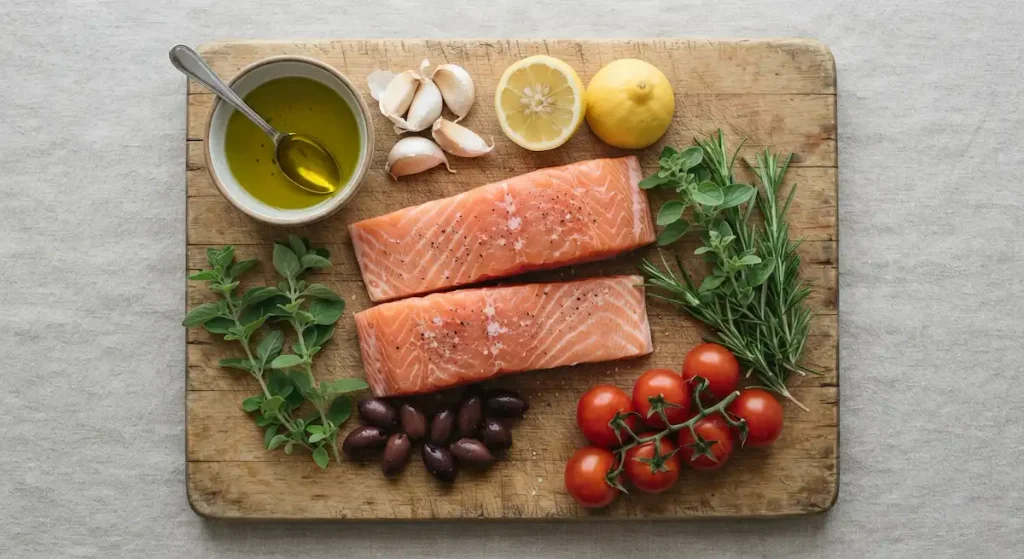
| Ingredient | Amount |
| Salmon fillets (skin-on) | 4 fillets, ~6 oz each |
| Extra-virgin olive oil | 3 tbsp |
| Garlic, minced | 3 cloves |
| Lemon, sliced + zested | 1 large |
| Kalamata olives, pitted | ½ cup |
| Cherry tomatoes, halved | 1 cup |
| Fresh oregano, chopped | 2 tbsp |
| Fresh rosemary | 2 sprigs |
| Sea salt | ¼ tsp (adjust to taste) |
| Black pepper | ½ tsp |
Method
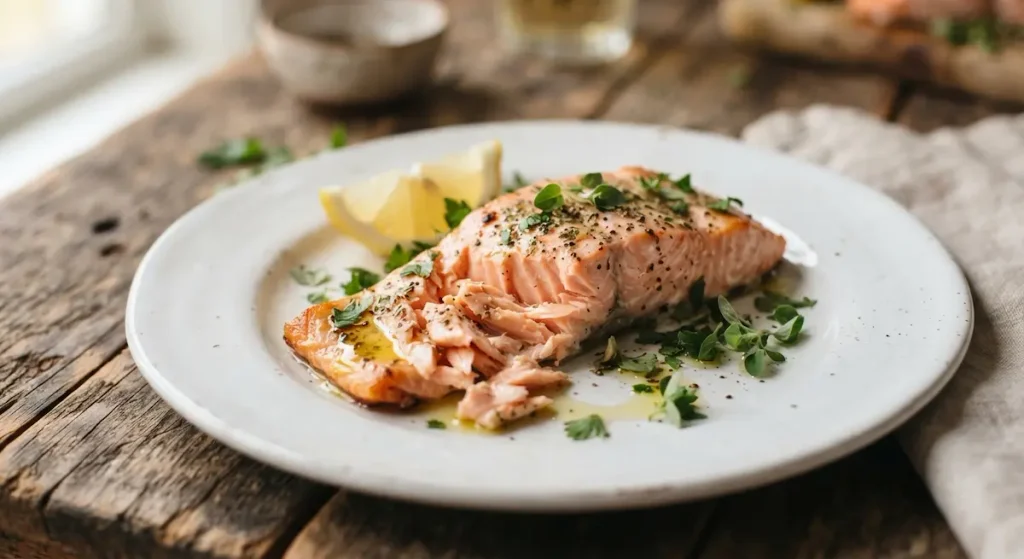
- Preheat your oven to 400°F (200°C).
- In a small bowl, combine the olive oil, minced garlic, lemon zest, and half the herbs, whisking until blended.
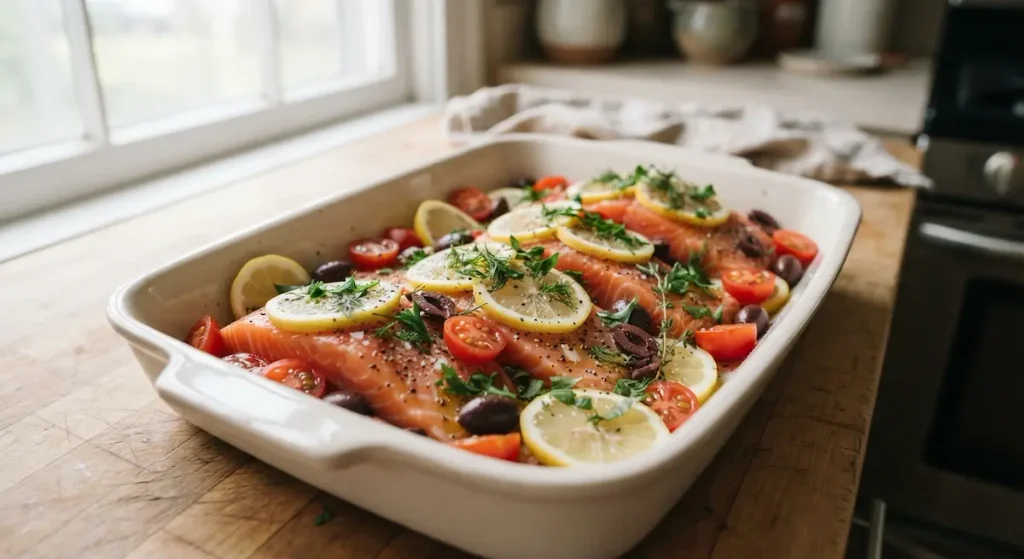
- Place the salmon fillets in a baking dish, skin-side down, and pour the olive oil mixture over the top.
- Scatter the olives, cherry tomatoes, and lemon slices around the fillets.
- Season lightly with sea salt and black pepper, then top with remaining herbs.
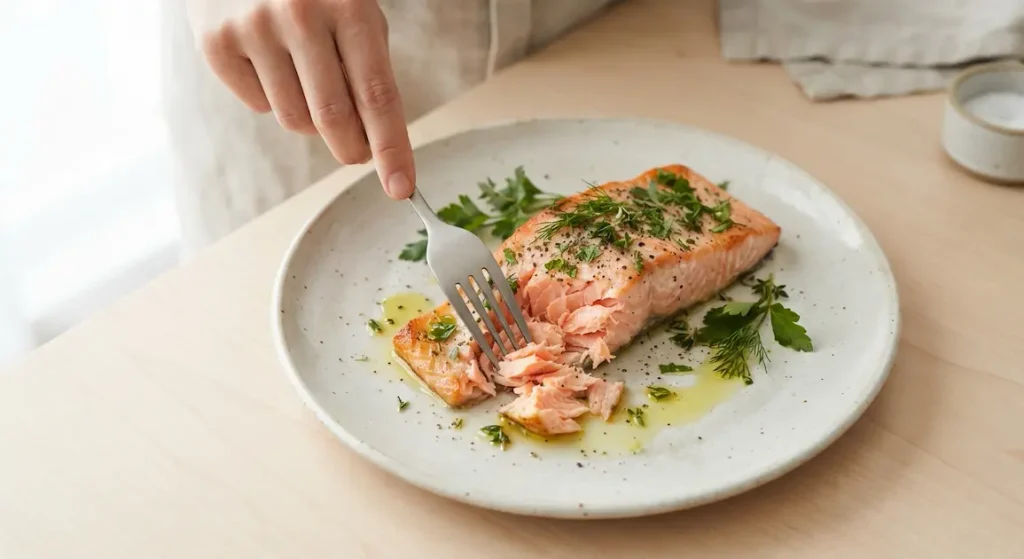
- Bake for 12–15 minutes, until the salmon flakes easily with a fork but still looks glossy in the center.
- Rest for 2–3 minutes before serving — this keeps the fillets moist and gives the juices a moment to settle back in.
Why baking beats frying here
Baking at a moderate temperature protects the integrity of those omega-3 fats. High-heat frying, particularly with repeated or prolonged exposure, can promote oxidation of polyunsaturated fats — which somewhat defeats the purpose of choosing salmon in the first place. Baking this mediterranean salmon recipe at 400°F keeps the cooking gentle enough to preserve most of what makes the fish worth eating.
Nutrition Facts (per serving)
| Nutrient | Amount |
| Calories | ~365 kcal |
| Protein | 34 g |
| Carbohydrates | 6 g |
| Fiber | 2 g |
| Sugar | 2 g |
| Sodium | 480 mg |
| Total fat | 22 g |
| — Saturated fat | 3.5 g |
| — Unsaturated fat | 17 g |
That fat breakdown is really the headline number for this section: roughly three-quarters of the fat in this dish is unsaturated, coming primarily from the salmon and olive oil. That ratio is exactly the “fat quality over fat quantity” principle liver-focused dietary guidance keeps circling back to.
Who This Recipe Is Actually For
- Low-sodium — achievable with a lighter hand on the olives and salt (swap in fresh herbs and lemon zest to compensate for flavor).
- Diabetic-friendly — low in refined carbohydrates, with a glycemic profile that won’t spike blood sugar.
- Heart-healthy — the MUFA and omega-3 combination is a well-established cardiovascular ally.
- Anti-inflammatory — polyphenols and omega-3s both work against chronic low-grade inflammation.
- High-protein — 34g per serving supports satiety and muscle maintenance.
- Liver-friendly / MASLD-conscious — the specific reason this mediterranean salmon recipe lives in this category to begin with.
- Low-saturated-fat — under 4g per serving, well below what typically raises concern in liver-focused eating patterns.
FAQ
Does eating fish actually help reverse fatty liver?
Not on its own, and I want to be direct about that. The evidence supports omega-3-rich fish as part of a broader dietary pattern that can reduce liver fat and improve liver enzymes over time — a 2024 meta-analysis found measurable reductions in ALT and AST with omega-3 supplementation — but no single food reverses established liver disease. Think of this mediterranean salmon recipe as one supportive habit within a larger pattern, not a standalone fix.
Is all fat bad for a liver with MASLD/NAFLD?
No, and this might be the most persistent myth in liver-focused eating. The research consistently points to fat type mattering more than fat amount. Diets built around monounsaturated and omega-3 fats — the kind found throughout this mediterranean salmon recipe — are associated with improved liver enzyme profiles, while diets heavy in saturated fat tend to move in the opposite direction.
How often should I eat a mediterranean salmon recipe like this for liver benefits?
Most dietary guidance for liver health points toward two to four servings of fatty fish per week, which lines up with broader Mediterranean-diet recommendations. This recipe fits comfortably into that rhythm as a regular, not occasional, dinner.
Can this recipe help lower liver enzymes?
Individual results vary, and this isn’t a substitute for medical monitoring. But the ingredients in this mediterranean salmon recipe — omega-3s, MUFAs, polyphenols — each have research behind them specifically in the context of ALT and AST improvement, which is A claim that carries real weight — well beyond simply calling a food “generally healthy.”
A Quick Disclaimer
This piece is meant to inform and educate, not to serve as medical advice. If you have diagnosed liver disease, elevated liver enzymes, or another condition affecting your diet, please talk with your doctor or a registered dietitian before making significant changes — what’s supportive for one liver panel isn’t automatically right for another.
Conclusion
Your liver doesn’t ask for applause. It just keeps reconciling the ledger, meal after meal, mostly without incident — until, for some people, it doesn’t. This mediterranean salmon recipe isn’t a grand gesture. It’s a small, repeatable entry in a much longer story: omega-3s that help the liver export fat instead of hoarding it, olive oil doing quiet metabolic work, and a handful of polyphenols standing guard against oxidative stress. None of that requires drama. It just requires showing up to dinner with better ingredients.
If this is the kind of eating you’re trying to build — not a diet, just a pattern your future bloodwork will recognize — I’d love to hear how it goes. Drop a comment below with how you customized it, share this mediterranean salmon recipe with someone whose labs could use the company, or subscribe to the DocCuisine newsletter for more recipes built the same way: food first, medicine second.
What Readers Think :
There are no reviews yet. Be the first one to write one.