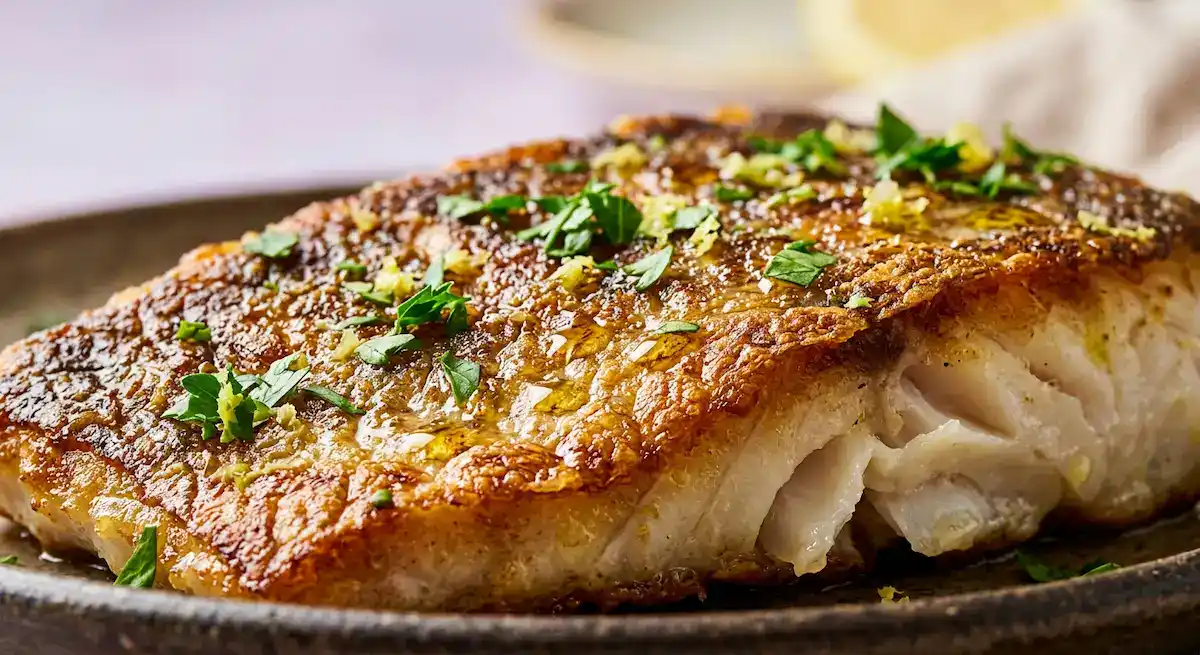
Pan-Fried Cod: Crispy, Easy Weeknight Recipe
A healthy-liver angle on a weeknight classic — because good food should work as hard as you do.
There’s a particular kind of hunger that shows up around hour eleven of a hospital shift. It isn’t dramatic. It’s just quiet and insistent, and by the time you notice it, you’re standing in front of a vending machine deciding between a granola bar that’s mostly sugar and a bag of chips that’s mostly salt. I’ve found myself making that same choice more times than I care to admit. And somewhere in my second year of medical school, sitting in a lecture on metabolic liver disease, I remembered every single one of those vending machine dinners and thought: my liver has been reading every ingredient label I never looked at.
That simple thought is exactly why I created this pan-fried cod recipe. It’s simple enough to make after a long day, but it’s built with an organ in mind that rarely gets credit for how much work it’s doing. If you’re here because you’re managing a fatty liver diagnosis, supporting a family member through one, or just trying to eat in a way that’s kinder to your body long-term, this pan-fried cod recipe is a genuinely good place to start — and it happens to be one of the easiest liver-healthy recipes in my rotation.
Table of Contents
Doctor’s Note: Why Cod, Specifically
Here’s the plain-language version of what I learned in that lecture, minus the slides.
Your liver processes essentially everything you eat. Fat, sugar, alcohol, medications — it all passes through hepatocytes, the liver’s main working cells, which store, convert, and ship out nutrients depending on what your body needs. When you consistently eat more saturated fat and refined carbohydrate than your metabolism can efficiently use, some of that surplus gets stored as fat inside the liver itself. Over time, that buildup is what defines metabolic dysfunction-associated steatotic liver disease — MASLD, formerly known as non-alcoholic fatty liver disease, or NAFLD.
Cod earns its place in fatty liver recipes for a few concrete reasons:
- It’s very low in saturated fat. According to USDA FoodData Central, a cooked Atlantic cod fillet has less than 1 gram of saturated fat per serving — a fraction of what you’d find in most red meat or processed protein.
- It’s a lean, complete protein source. A single fillet delivers close to 40 grams of protein with minimal fat, which matters because adequate protein intake supports liver tissue maintenance and helps preserve muscle mass — increasingly recognized as protective in people managing fatty liver disease.
- It naturally starts low in sodium, before you season it. This matters more than most people realize, since excess sodium is one of the more overlooked contributors to fluid retention and blood pressure strain in liver disease management.
To be fair, cod isn’t a top omega-3 source the way salmon or sardines are — I won’t oversell that part. But as a lean protein that displaces saturated-fat-heavy options at dinner, this pan-fried cod recipe does real, measurable work. Clinical guidance from hepatology programs like University of Michigan’s Gastroenterology and Hepatology department specifically recommends choosing lean proteins such as fish over fatty cuts of meat as one of the core dietary shifts for people managing MASLD.
What Your Liver Actually Does With This Meal
Think of your liver as an editor sitting at a desk, reading every plate you send its way before deciding what gets filed, what gets burned for fuel, and what gets flagged as excess. A saturated-fat-heavy dinner is a manuscript full of red ink — dense, hard to process, prone to being stored rather than used. A pan-fried cod recipe built around lean protein, unsaturated fat, and controlled sodium is a much easier read. Less gets flagged. Less gets stored.
This is also why the way you cook the fish matters almost as much as the fish itself. Pan-searing in a small amount of olive oil keeps this a genuinely liver-friendly recipe; deep-frying in a heavy batter would undo a lot of that benefit by adding refined carbohydrate and a much larger fat load. The technique is part of the medicine here, not just the ingredient list.
Research also backs up the broader pattern this dish fits into. A widely cited case-control study published via the National Institutes of Health’s PubMed Central found that people with NAFLD consumed significantly more red and processed meat than those without it, while fish consumption trended in the opposite direction. That’s not a claim that any single pan-fried cod recipe will reverse liver disease — no single meal does that — but it does support the broader dietary pattern this recipe belongs to.
Choosing and Prepping Your Cod
Fresh vs. Frozen
Nutritionally, they’re comparable. Frozen cod is often flash-frozen shortly after catch, which can actually preserve freshness better than fish that’s traveled a long way “fresh.” Don’t let frozen fillets talk you out of this pan-fried cod recipe — they work beautifully.
Wild-Caught vs. Farmed
Both are reasonable choices nutritionally. Wild-caught Atlantic or Pacific cod tends to be the more common labeling you’ll see; either way, the liver-friendly nutrition profile — low saturated fat, high protein — holds up.
The Pat-Dry Step (Don’t Skip It)
Before it touches the pan, pat your cod fillets completely dry with paper towels. Excess moisture is the enemy of a good sear — it steams the fish instead of browning it, and it also means the fillet absorbs more oil trying to compensate. A dry fillet needs less oil to crisp properly, which keeps this a lighter, more liver-conscious dish overall.
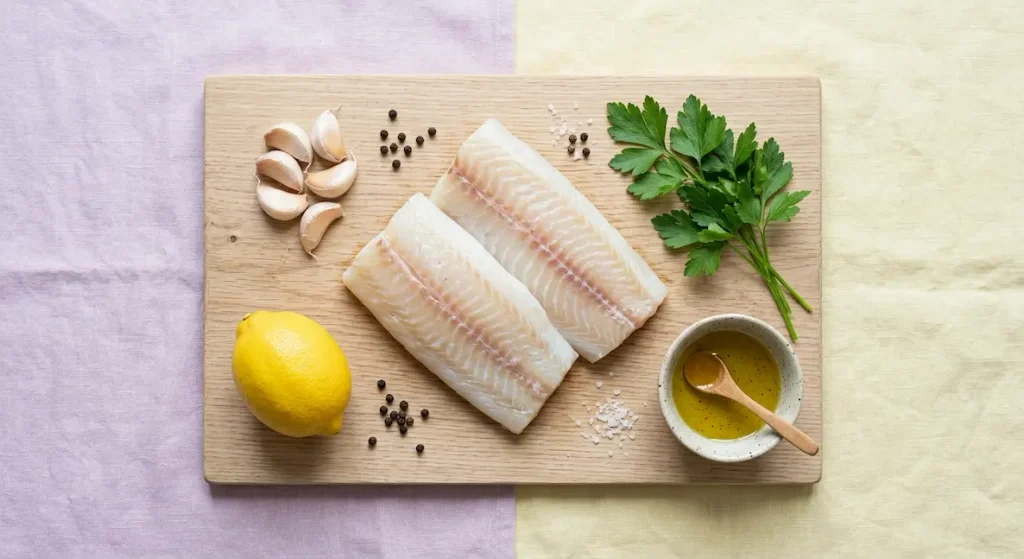
Ingredients
| Ingredient | Amount | Note |
| Cod fillets (6 oz each) | 2 | Patted completely dry |
| Extra-virgin olive oil | 1 tbsp | A liver-friendlier fat than butter |
| Garlic, minced | 2 cloves | — |
| Lemon | 1 | Juiced and zested |
| Fresh parsley, chopped | 2 tbsp | — |
| Black pepper | To taste | — |
| Low-sodium seasoning blend or a light pinch of salt | To taste | Keep this modest |
The Pan-Fried Cod Recipe
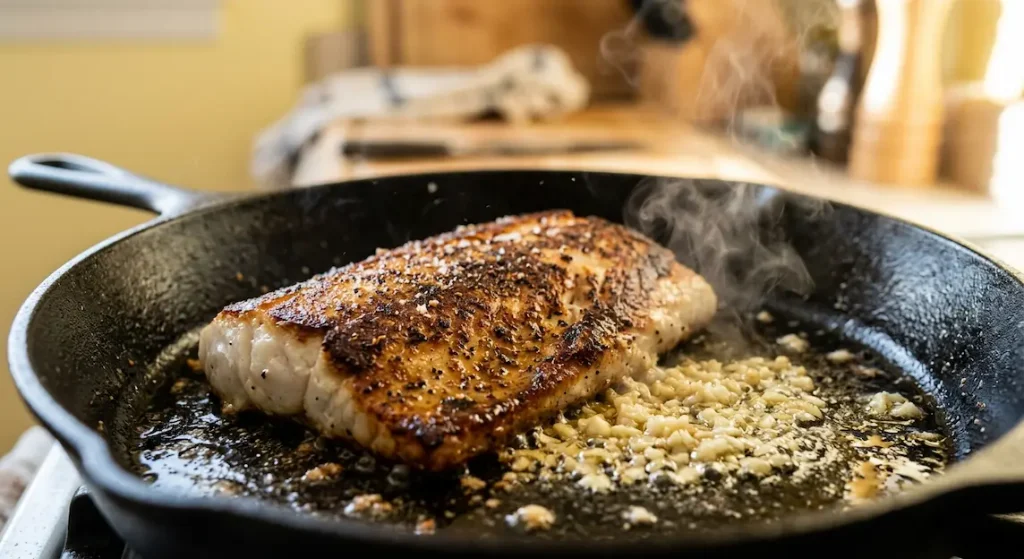
Prep — 5 Minutes
- Remove cod fillets from the refrigerator 10 minutes before cooking so they cook more evenly.
- Pat each fillet dry with paper towels — thoroughly, on both sides.
- Season lightly with black pepper and your chosen low-sodium seasoning.
Sear — 8–10 Minutes
- Heat olive oil in a stainless or cast-iron skillet over medium-high heat until it shimmers.
- Place fillets in the pan without crowding them. Let them sear undisturbed for 3–4 minutes — resist the urge to move them.
- Add minced garlic to the pan around the fillets in the last minute of the first side, letting it turn fragrant without burning.
- Flip carefully and cook the second side for another 3–4 minutes, until the fish flakes easily with a fork and reaches an internal temperature of 145°F.
Finish and Plate
Remove from heat. Squeeze fresh lemon juice over the fillets and scatter lemon zest and chopped parsley on top.
Let the fish rest for 1–2 minutes before serving — this keeps it moist and makes for a cleaner plate.
This entire pan-fried cod recipe comes together in under 20 minutes, which is exactly the kind of realistic timeline that makes a liver-healthy recipe something you’ll actually repeat, not just admire once and forget.
Nutrition Facts
Per serving — one 6 oz fillet, pan-seared in olive oil
| Nutrient | Amount | Liver-Health Note |
| Calories | ~200 | — |
| Protein | ~39 g | High-protein, supports tissue maintenance |
| Total Fat | ~5 g | Mostly unsaturated (from olive oil) |
| Saturated Fat | <1 g | Key flag — very low |
| Carbohydrates | ~1 g | — |
| Fiber | 0 g | Add a side for fiber — see below |
| Sugar | 0 g | — |
| Sodium | ~150–200 mg (lightly seasoned) | Watch this if you add extra salt |
Values are estimated from USDA FoodData Central figures for cooked Atlantic cod, adjusted for a 6 oz portion and the added olive oil in this preparation.
Which Diets This Fits
- Liver-friendly / MASLD-conscious — low saturated fat, controlled sodium, lean protein
- Heart-healthy — minimal saturated fat, unsaturated cooking fat
- High-protein — nearly 40 g per serving
- Diabetic-friendly — negligible carbohydrate and sugar
- Low-sodium — as written, well under typical daily limits per serving
- Anti-inflammatory-supportive — lean protein plus olive oil, consistent with Mediterranean-style eating patterns
Make It Yours Without Losing the Liver-Friendly Profile
Herb Swaps
Try dill or thyme instead of parsley for variety without adding sodium.
Extra Citrus
A splash of orange juice alongside the lemon adds sweetness without sugar.
Pair It Well
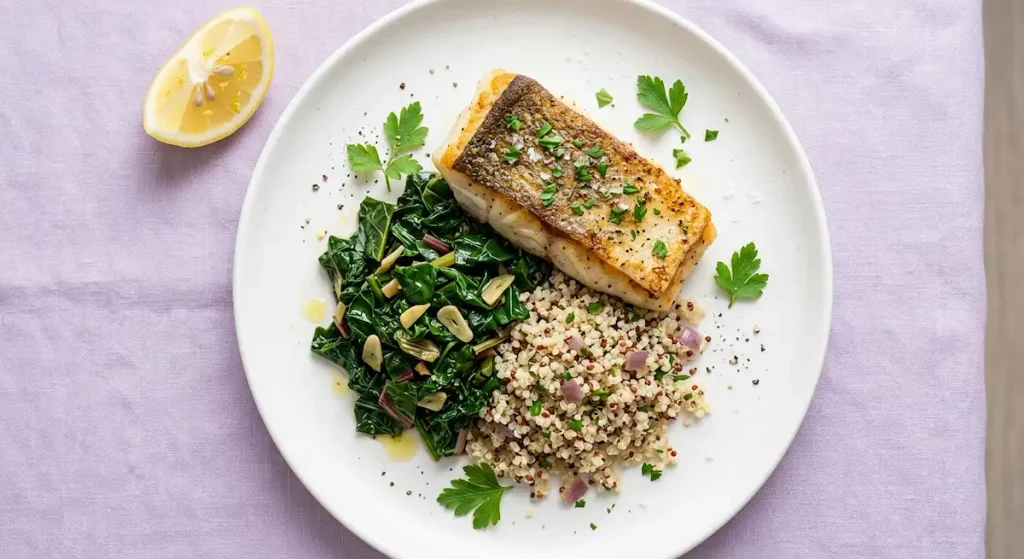
Serve alongside sautéed leafy greens or a whole grain like farro or quinoa — this is also where you can round out the fiber this dish alone doesn’t provide. Fiber is one of the more consistently supported dietary factors in liver health research, alongside the reduced saturated fat and refined carbohydrate intake covered in our other fatty liver recipes on the blog.
Frequently Asked Questions
Is a Pan-Fried Cod Recipe Actually Healthy, or Does Frying Cancel Out the Benefits?
Pan-searing in a small measured amount of olive oil is very different from deep-frying in batter and oil. This pan-fried cod recipe uses about a tablespoon of oil total, which keeps the saturated fat content minimal while still giving you that crisp, satisfying texture.
Is All Fish Good for a Fatty Liver?
This is one of the more common myths out there, and it’s worth addressing directly: no. The liver-health benefit comes from lean, minimally processed preparations — not from all things labeled “fish.”
Breaded and deep-fried fish (think fish sticks or fried fish platters) can carry as much saturated fat and refined carbohydrate as a fast-food meal, largely canceling out the advantage of choosing fish in the first place. Similarly, fish that’s heavily salted or cured can carry a sodium load that works against liver-friendly eating.
The version of cod in this recipe — fresh, lightly seasoned, and pan-seared — is where the actual benefit lives.
Can I Eat This If I’ve Been Diagnosed With Fatty Liver Disease, or Is It Only for Prevention?
Lean fish like cod is broadly recommended within liver-healthy eating patterns for both prevention and active management of MASLD, according to hepatology-based dietary guidance. That said, individual recommendations can vary depending on disease stage and other health conditions, which is exactly why the disclaimer below matters.
How Often Can I Include a Pan-Fried Cod Recipe Like This in My Week?
General dietary guidelines recommend seafood at least twice a week for most adults, and lean white fish like cod fits comfortably into that pattern several times over without the saturated fat concerns that come with red meat in similar quantities.
A Note Before You Cook
This article is for general educational purposes and reflects publicly available nutrition science — it isn’t personalized medical advice. If you’re managing a diagnosed liver condition, please talk with your physician or a registered dietitian about what fits your specific situation. Food first, medicine second — but medicine still matters.
Conclusion
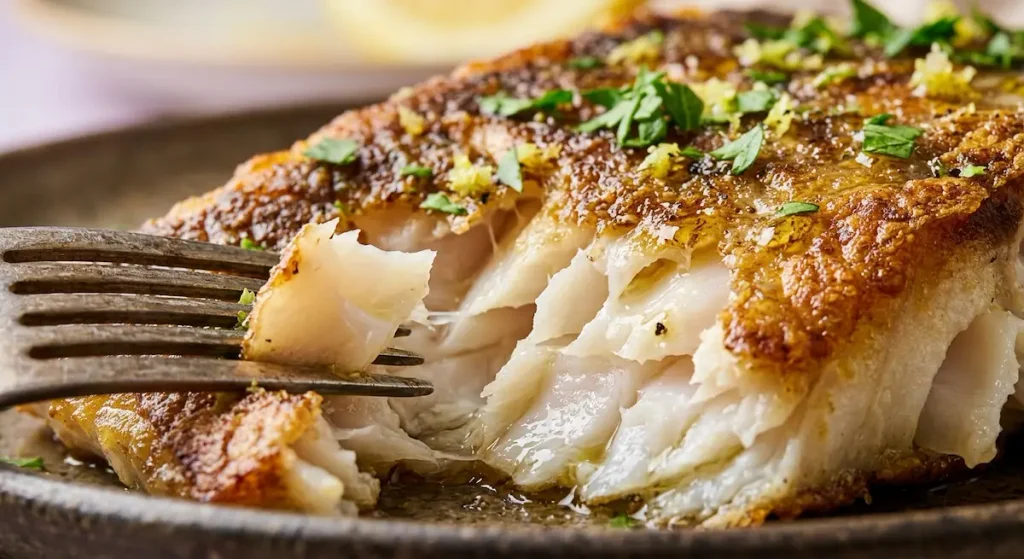
Your liver doesn’t ask for much. It just quietly reads every meal you send its way and does the best it can with what’s on the plate. A pan-fried cod recipe like this one isn’t going to undo years of vending-machine dinners on its own — no single meal ever does — but it’s a genuinely easy, genuinely enjoyable way to send your liver something worth reading. Lean protein, controlled sodium, good fat, twenty minutes, one pan. That’s the whole case for it.
Cook This Tonight?
I’d love to hear how it turned out — drop a comment, or share a photo if you post it. And if liver-friendly cooking is something you want more of, join the DocCuisine community and subscribe to the newsletter for new fatty liver recipes and the medical reasoning behind them.
What Readers Think :
There are no reviews yet. Be the first one to write one.