Beetroot Red Soup: The Polish Borscht Recipe Your Liver Actually Asked For
Table of Contents
There’s a particular kind of tired that comes from studying liver biochemistry until midnight — the tired where the words “hepatic methylation” start to feel personal. That’s the state I was in the week I called my grandmother to ask, once and for all, how she actually makes her borscht.
Not the version I remembered from childhood, guessed at and improvised. The real one.
She talked me through it the way she always has: low heat, never a hard boil, a splash of vinegar right at the end “so the color doesn’t die.” I was scribbling notes on the same legal pad where, an hour earlier, I’d been sketching out how the liver’s Phase II detoxification pathway depends on methyl donors like betaine to do its job.
And somewhere between her instructions and my notes, it clicked. This beetroot red soup she’d been making for sixty years wasn’t just comfort food. It was, almost accidentally, a bowl of exactly what a working liver needs.
That’s the story behind this recipe, and it’s also the reason I wanted to write about it properly instead of just posting the ingredient list.
This beetroot red soup — a Polish-style borscht — sits at the exact intersection this blog is built around: food first, medicine second. So let’s get into both.
Doctor’s Note: Why This Beetroot Red Soup Deserves a Seat at the Detox Table
Quick plain-language version before we go further, because I know “liver health” gets thrown around loosely in food writing, and I don’t want to be one more site doing that.
Your liver detoxifies compounds in two broad phases. Phase I breaks things down; Phase II attaches small molecules to those broken-down compounds so your body can safely clear them.
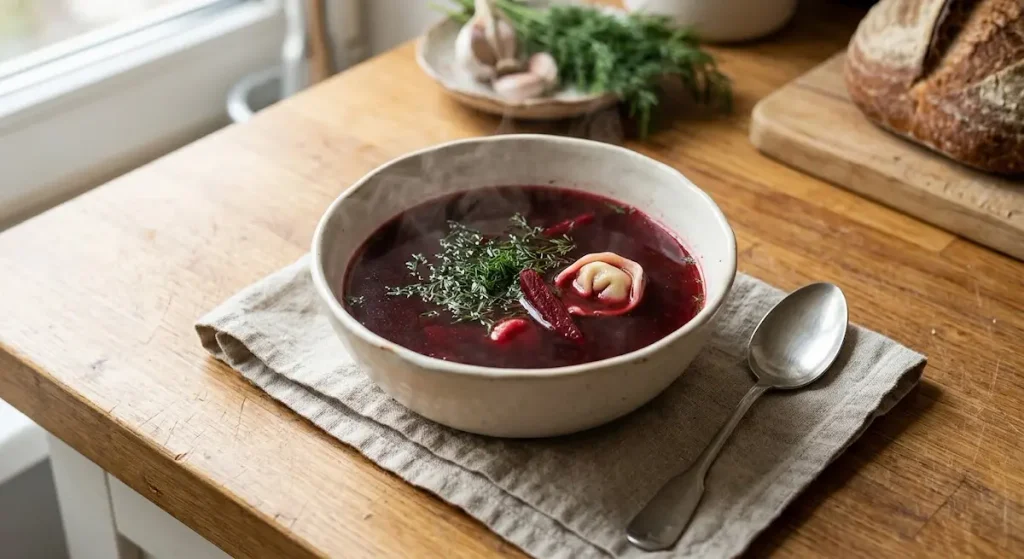
Phase II specifically depends on methyl donors — nutrients like betaine and choline — to run efficiently. Beets are one of the few everyday vegetables that are genuinely rich in betaine, also known as trimethylglycine, which is why nutrition researchers keep circling back to them in studies on liver fat metabolism.
I want to be careful with the wording here, because this is where a lot of “detox” marketing goes wrong: this beetroot red soup doesn’t flush toxins out of your body in some dramatic cleanse.
Your liver and kidneys already do that continuously, whether or not you eat beets. What betaine-rich foods appear to do, based on research published through outlets like the NIH, is support the biochemical machinery your liver already relies on — particularly in the context of fat metabolism and liver health markers.
That’s a subtler, more honest claim than “detoxes your body,” and it’s the one I’m comfortable standing behind.
What Makes This Beetroot Red Soup “Liver-Healthy,” Beyond the Marketing
The Betaine Connection
Betaine’s job in the body is to donate a methyl group during a reaction that converts homocysteine back into methionine — a process tied to healthy liver fat metabolism.
Diets naturally rich in betaine, with beets among the most concentrated common sources according to USDA food composition data, have been studied for their relationship to reduced liver fat accumulation, particularly in research around non-alcoholic fatty liver disease.
I’m not going to tell you a bowl of soup reverses a diagnosed liver condition — that’s not how nutrition science works, and any article that implies otherwise should make you skeptical.
But as a dietary pattern choice, leaning into betaine-rich foods like the beets in this beetroot red soup is a genuinely reasonable, evidence-aligned habit.
Nitrates, Blood Pressure, and the Liver-Heart Overlap
Beets also contain dietary nitrates, which your body converts into nitric oxide — a compound that helps blood vessels relax and function properly. Mayo Clinic and NIH-affiliated research have both looked at beet-derived nitrates in the context of blood pressure regulation, and while individual responses vary, the mechanism itself is well established. Here’s the connection I don’t see made often enough: a liver that isn’t working against constant cardiovascular strain has an easier time doing its own job well. Liver health and heart health aren’t separate conversations. This beetroot red soup happens to sit at the overlap of both.
Fiber, the Quieter Detox Pathway
Your liver packages processed compounds into bile, which then needs fiber in the gut to bind to it and carry it out. This is the part of the detox story that gets almost no attention, probably because “fiber” isn’t as exciting a word as “detox.” The cabbage in traditional Polish borscht adds insoluble fiber, while the beets themselves contribute soluble fiber — a combination that supports this whole downstream elimination process. It’s unglamorous, but it’s arguably the most important structural piece of why this dish works the way it does.
The Polish Roots of This Beetroot Red Soup
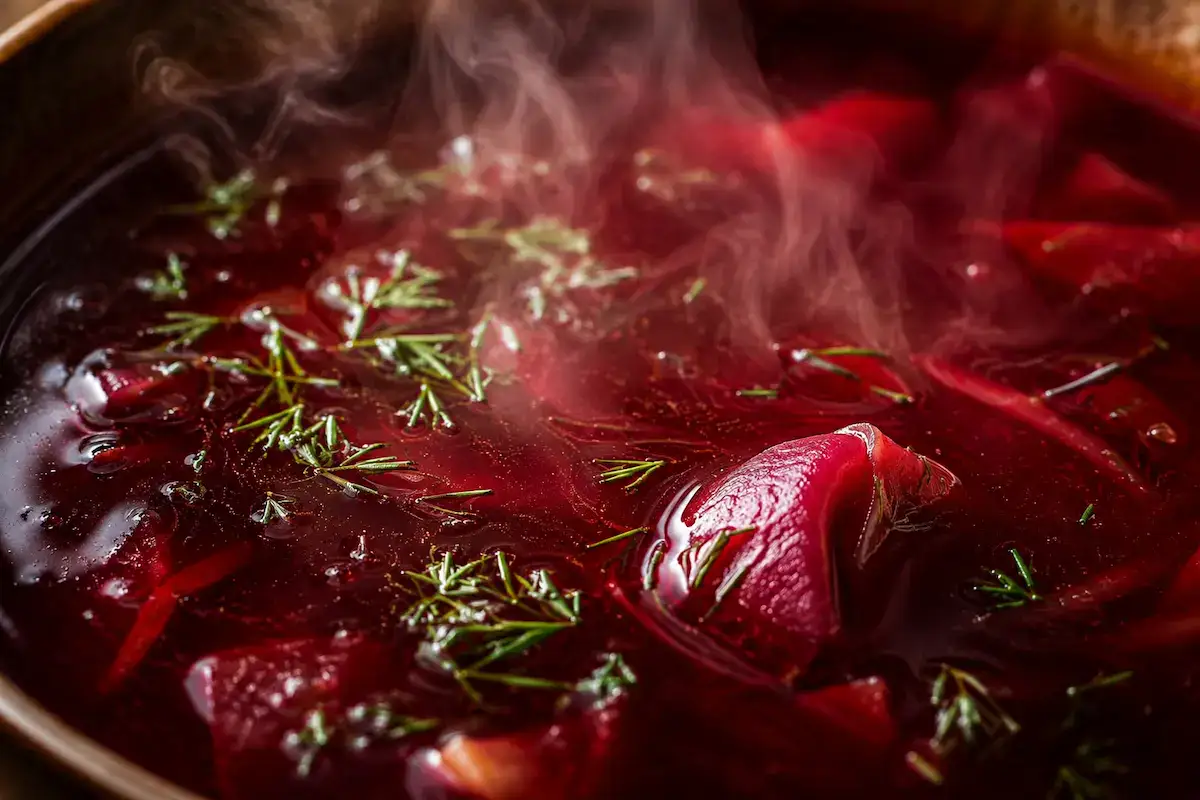
It’s worth pausing on where this recipe actually comes from, because “borscht” gets used as a catch-all term online in a way that flattens some real regional differences. Polish barszcz is typically clearer and tangier than its Ukrainian counterpart, often built on a fermented beet base (kwas buraczany) rather than the heartier, more vegetable-dense style you’ll find elsewhere in Eastern Europe. That fermentation tradition predates any modern language around “gut health” or “probiotics” by generations — it was just how people preserved beets through the winter and got a tart, complex flavor out of them in the process. This beetroot red soup leans into that Polish clarity: bright, a little sour, built to be honest rather than heavy.
Ingredients for This Beetroot Red Soup
| Ingredient | Amount | Why it’s here |
| Beets, roasted or boiled | 4 medium | Betaine, nitrates, color, natural sweetness |
| Green cabbage, shredded | 2 cups | Traditional base, insoluble fiber |
| Carrots, diced | 2 medium | Sweetness, beta-carotene |
| Yellow onion, diced | 1 medium | Flavor base |
| Garlic cloves, minced | 2 | Allium compounds, depth of flavor |
| Vegetable or bone broth | 6 cups | Mineral and protein base |
| Bay leaf | 1 | Classic Polish aromatic |
| Allspice berries | 3–4 | Traditional flavor note |
| Fresh dill | Small handful | Brightness, classic garnish |
| Lemon juice or white vinegar | 2 tbsp | Acidity, color preservation, iron absorption |
| Salt | To taste, kept modest | Flavor without overloading sodium |
One small but genuinely useful detail: pairing the vitamin C in that lemon juice with the beets’ non-heme iron actually improves how much of that iron your body can absorb. It’s a small mechanic, but it’s a real one — and it’s part of why the acid at the end of this beetroot red soup isn’t just a flavor choice.
Ingredient swaps: If you’re trying to keep your sodium intake lower, choose a low-sodium broth and add salt at the table as needed rather than seasoning the entire pot. For a heartier, higher-protein bowl, stir in shredded chicken or a can of drained white beans. Garlic-sensitive? Leave it out — the dish holds up fine without it.
How to Make Beetroot Red Soup: Step-by-Step
- Roast the beets rather than boiling them if you have the time — roasting preserves more of their color and nutrient content than a hard boil does. Wrap in foil, roast at 400°F until fork-tender, then peel and dice.
- Sauté the aromatics. In a large pot, cook the onion and carrot in a little oil over medium heat until softened, about 5–6 minutes. Stir in the garlic during the final minute of cooking to keep it from burning.
- Add the broth, cabbage, bay leaf, and allspice. Bring to a gentle simmer — not a rolling boil, which is where you start losing both color and delicate nutrients.
- Add the diced beets and let the soup gently simmer for 15–20 minutes, or until the cabbage is tender while still holding its texture.
- Finish with the acid. This is the step my grandmother was most insistent about: add the lemon juice or vinegar right at the end, off the heat. It keeps the color vivid and gives this beetroot red soup its signature tang instead of a flat, one-note sweetness.
- Season, garnish, and serve. Taste for salt, remove the bay leaf and allspice berries, and top with fresh dill.
Nutrition Facts (Per Serving)
| Nutrient | Amount per serving |
| Calories | 120 |
| Protein | 4 g |
| Carbohydrates | 21 g |
| Fiber | 5 g |
| Sugar | 11 g |
| Sodium | 380 mg |
Values are approximate, based on the ingredients and quantities listed above using a standard vegetable broth; your numbers will shift slightly depending on your specific broth and salt levels.
Which Diets Does This Beetroot Red Soup Fit?
- Low-sodium — when made with a low-sodium broth and salt added to taste
- Diabetic-friendly — moderate natural sugars offset by a solid fiber content, which slows the glucose response; still worth portioning mindfully
- Heart-healthy — dietary nitrates and minimal saturated fat
- Anti-inflammatory — beets get much of their pigment from betalains, plant compounds studied for antioxidant activity in peer-reviewed nutrition research
- Vegetarian and vegan-adaptable — simply use a vegetable broth
- Gluten-free — no substitutions needed
Frequently Asked Questions
Is this beetroot red soup actually good for your liver, or is that just a wellness trend?
That’s a reasonable question, and the most accurate answer depends on the details. No single food “detoxes” your liver in the dramatic sense wellness marketing implies — your liver is already detoxing continuously on its own. What beets genuinely do is supply betaine, a compound your liver’s own detox pathways rely on. That’s a real, research-backed mechanism, just a quieter and less exciting one than the claims you’ll see elsewhere.
Can I make this beetroot red soup ahead of time?
Yes, and honestly it tastes better the next day, once the flavors have settled.Keep the soup refrigerated for up to four days, or freeze it for as long as three months.
Does cooking beets destroy their nutrients?
Some nutrient loss happens with any cooking method, but roasting or gently simmering — rather than boiling hard for a long time — helps preserve more of their color, betaine, and nitrate content.
Why does my urine sometimes turn pink after eating beets? Is that dangerous?
This is called beeturia, and for most people it’s completely harmless — just the pigment passing through your system. It’s more common in people with lower iron stores, since iron affects how the pigment gets broken down. If it happens regularly and you’re also feeling unusually fatigued, it’s worth mentioning to your doctor, but on its own it’s not a red flag.
Is this beetroot red soup keto-friendly?
Not really, no — beets are one of the higher-carb root vegetables, so this particular recipe isn’t a great fit for a strict keto diet. If you’re on that plan, this is one to enjoy occasionally rather than as a regular staple.
A Quick Medical Disclaimer
This article is intended for general educational information and should not replace personalized medical advice from a qualified healthcare professional. If you have diagnosed liver disease, a history of kidney stones (beets are high in oxalates), or you’re on blood pressure medication, talk to your own healthcare provider before making significant changes to your diet.
Conclusion
I keep coming back to that phone call — my grandmother describing a technique she’s never once written down, me taking notes next to a biochemistry textbook that happened to explain, in clinical language, exactly why her instincts were right. That’s the whole premise of this blog, really: food doesn’t need to be reinvented to be medicine. Sometimes it just needs someone to explain what was already true about it. This beetroot red soup isn’t a miracle cure, and I’d be doing you a disservice if I wrote it up like one. But it’s a genuinely well-built bowl of food — one where the flavor, the tradition, and the biochemistry all happen to point in the same direction.
If you make this beetroot red soup, I’d love to hear how it turns out — drop a comment below, or tag me if you post it. And if this kind of food-meets-medicine breakdown is your thing, consider signing up for the newsletter; I send out one new recipe and one plain-language health explainer every week, no fluff attached.
What Readers Think :
There are no reviews yet. Be the first one to write one.