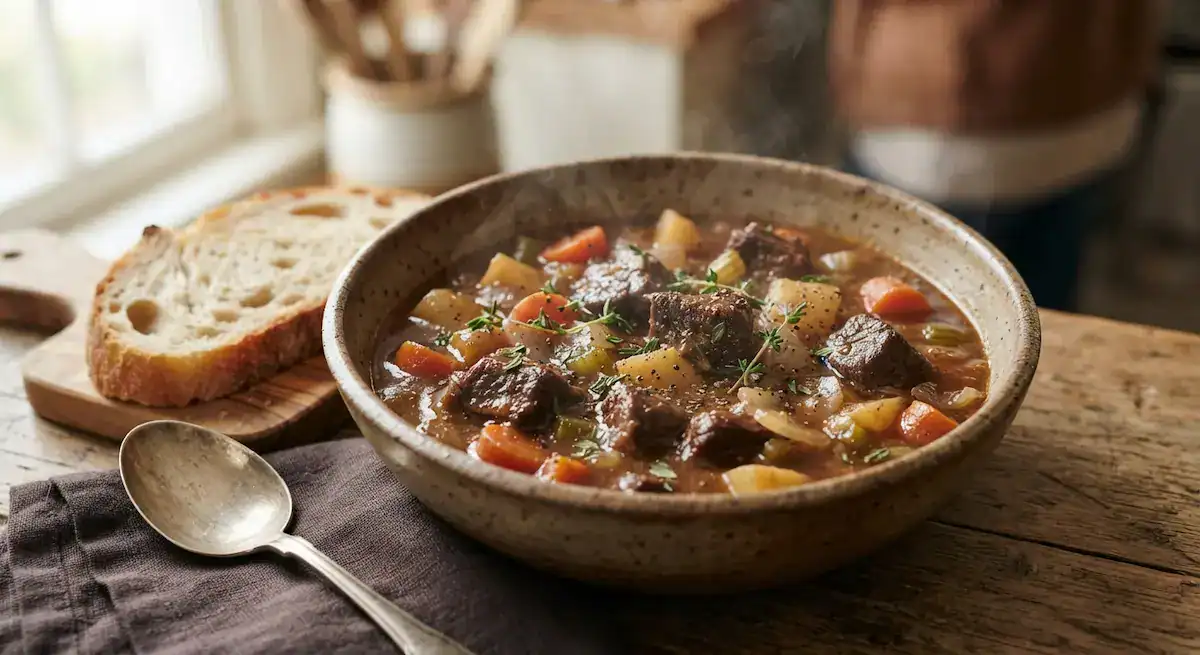
Beef Stew in Oven: A Simple Guide to Perfect Oven-Baked Beef Stew
There’s a particular sound an oven door makes when you open it on a cold afternoon — a soft rush of warm air, the smell arriving half a second before the heat does. I remember the first time I made beef stew in oven on purpose, not because a recipe told me to, but because I had exactly three hours between a lecture and a shift and no idea what to do with my hands that didn’t involve a textbook. I browned some beef, chopped some vegetables, and put a heavy pot in the oven. Then I sat at my kitchen table and, for the first time in weeks, didn’t rush anything.
That afternoon taught me something I didn’t expect from a pot of meat and carrots: cooking and medicine share the same discipline. You can’t rush tissue that needs time to change. Whether it’s a piece of chuck roast or a body recovering from something hard, the process asks for patience, not speed. That idea is the thread running through this entire guide to beef stew in oven — because the “why” behind the technique turns out to matter almost as much as the recipe itself.
At DocCuisine, that’s the whole philosophy: Food First, Medicine Second. You don’t need a lecture to eat well. You need to understand, in plain terms, what’s actually happening on your plate.
Table of Contents
The Doctor’s Note: What Slow-Cooked Beef Is Actually Doing for Your Body
Let’s start with the science, explained the way I’d explain it to a friend standing next to me at the stove — no jargon left unexplained, nothing you need a medical degree to follow.
Why Tough Meat Needs Time, Not Heat
Cuts like chuck — the kind you want for beef stew in oven — are full of a tough protein called connective tissue. Think of it as the meat’s internal rubber bands, holding the muscle fibers together. Cook it fast and hot, and those bands stay tight, which is why a quickly-seared piece of chuck is chewy and disappointing. But cook it low and slow, and those same rubber bands gradually melt into something soft called gelatin — the exact thing that makes a good stew’s sauce feel silky instead of watery.
That’s not a nutrition claim. It’s basic kitchen chemistry, and it’s the entire reason beef stew in oven tastes better after two and a half hours than it does after thirty minutes.
Iron, in Plain Terms
Beef contains a form of iron your body absorbs more efficiently than the iron found in most plant foods. This matters most if you’re someone who gets unusually tired climbing stairs, feels short of breath doing ordinary things, or has been told by a doctor that your iron levels run low — a situation that’s especially common among menstruating women.
The National Institutes of Health’s Office of Dietary Supplements explains that the iron in meat, fish, and poultry is absorbed by the body more readily than the iron found in beans, spinach, or fortified cereals. You don’t need to memorize a percentage to take the point: a bowl of beef stew in oven is a genuinely useful source of the kind of iron your body doesn’t have to work hard to use.
Protein and Why This Meal Keeps You Full
In the simplest terms, protein takes longer for your body to digest than starchy carbohydrates do. That’s a big part of why a bowl of stew keeps you satisfied for hours, while a bowl of plain pasta might leave you hungry again by nine o’clock.
You might have felt this yourself without ever stopping to think about why — and that’s exactly why I like to explain it in everyday language, not medical jargon.
Sodium — The Place Home Cooking Quietly Wins
Canned soups and restaurant gravies are often salted heavily, partly for preservation and partly because salt is a fast, cheap way to boost flavor. When you build flavor slowly instead — through browning, through hours in the oven, through real aromatics — you need far less salt to get the same depth.
The CDC recommends most adults keep sodium intake under 2,300 milligrams a day, which works out to roughly one teaspoon of salt. A home-cooked pot of beef stew in oven, built with low-sodium broth and seasoned by taste rather than habit, can come in well under what a canned version delivers in a single bowl.
Here’s the thread back to where we started: your body repairs tissue slowly too. Bones, wounds, even fatigue — none of it responds well to being rushed. Neither does chuck roast.
Why the Oven, Specifically
Most instructions just tell you to put the pot in the oven and move on. I want to actually make the case, because the reasoning changes how you cook it.
An oven surrounds your pot with heat from every direction, which means the liquid inside simmers at a slow, steady rate rather than spiking against one hot spot the way it can on a stovetop burner. That evenness matters more than people realize — it’s the difference between a gentle, consistent melt of connective tissue and an uneven one where some pieces overcook while others stay tough.
A slow cooker, by contrast, seals in nearly all the moisture under a tight lid. That’s useful for some dishes, but for beef stew in oven, you actually want a small amount of evaporation over those two-plus hours. Leaving the lid slightly ajar lets steam escape gradually, which concentrates the flavor of the sauce instead of leaving it thin and diluted.
Browning the meat first also matters more here than it would in a slow cooker recipe. A slow cooker’s constant moisture can eventually build some depth of flavor on its own, given enough hours. An oven won’t do that same work for you — the sear has to happen before the braise, on the stovetop, or you’ll end up with a stew that tastes flat no matter how long it cooks.
The One-Pot Logic
A heavy, oven-safe pot — enameled cast iron is the classic choice — lets you do this entire process without switching dishes. Sear on the stovetop, then move the same pot straight into the oven. Fewer dishes, and no flavor left behind in a pan you didn’t bring with you.
Ingredients for Beef Stew in Oven

| Ingredient | Amount | Why It’s Here |
| Beef chuck roast, cubed | 2½ lb (1.1 kg) | The connective-tissue-rich cut that turns tender with time |
| Kosher salt | 1½ tsp, divided | Season the meat first, adjust the broth later |
| Black pepper | 1 tsp | |
| Olive oil | 2 tbsp | For browning |
| Yellow onion, diced | 1 large | |
| Carrots, cut into chunks | 3 medium | |
| Celery, sliced | 2 stalks | |
| Garlic, minced | 4 cloves | |
| Tomato paste | 2 tbsp | Depth, not sweetness |
| All-purpose flour | 3 tbsp | Thickens the sauce naturally |
| Low-sodium beef broth | 3 cups | The sodium lever — you control the salt |
| Dry red wine (optional) | ½ cup | Adds acidity that balances the richness |
| Bay leaves | 2 | |
| Fresh thyme | 4 sprigs | |
| Yukon gold potatoes, cubed | 1½ lb | |
| Fresh parsley | For serving |
If you’d rather skip the wine, replace it with a little extra broth and a splash of vinegar — you’re aiming for the acidity, not the alcohol.
How to Make Beef Stew in Oven, Step by Step
- Season and sear the beef in batches. Crowding the pot means the meat steams instead of browns, and browning is where most of the flavor of your beef stew in oven actually comes from.
- Sauté the onion, carrot, and celery in the same pot, using the browned bits stuck to the bottom as flavor rather than washing them away.
- Stir in the garlic and tomato paste for about a minute, then sprinkle in the flour and stir until it coats everything.
- Deglaze with the wine or broth-vinegar substitute, scraping up every browned bit as the liquid bubbles.
- Return the beef to the pot, then add the broth, bay leaves, and thyme.
- Cover and transfer the pot to a 325°F oven for about two to two and a half hours.
- Add the potatoes in the final 45 minutes so they cook through without turning mushy.
- Check for doneness by texture, not the clock. The beef should pull apart with light pressure from a fork — not resist it.
The Mistake That Ruins Most Oven-Baked Stew
Skipping the sear. Here’s the plain-language reason it matters: browning creates hundreds of new flavor compounds through a chemical reaction that only happens at high, dry heat. Once the meat is sitting in liquid, that reaction simply can’t happen anymore. Skip the sear, and no amount of oven time will get that flavor back.
How to Tell It’s Actually Done
Don’t trust the clock alone. If the meat still resists a fork after two hours, it needs more time in the oven — not less liquid, not higher heat. Time is the ingredient doing the real work here.
Nutrition Facts
These are estimates based on the ingredients above, divided across six servings. For precise numbers, run your exact ingredients and brands through USDA FoodData Central.
| Nutrient | Amount (estimated, per serving) |
| Calories | ~380 kcal |
| Protein | ~32 g |
| Carbohydrates | ~24 g |
| Fiber | ~4 g |
| Sugar | ~5 g |
| Total Fat | ~15 g |
| Saturated Fat | ~5 g |
| Sodium | ~420 mg |
That sodium figure is worth sitting with. At roughly 420 mg per serving, a bowl of homemade beef stew in oven uses under a fifth of the CDC’s general daily guidance — a very different number than what most canned or restaurant versions deliver in a single serving.
Who This Recipe Works For
- High-protein. A full, satisfying serving of protein in one bowl — around 32 grams per portion.
- Iron-rich. Genuinely useful context if you’ve been told your iron runs low, for the reasons explained above.
- Low-sodium adaptable. As written, with low-sodium broth and salt added to taste rather than habit, this fits comfortably into a lower-sodium eating pattern.
- Heart-conscious, with a small adjustment. Trim visible fat from the chuck before searing, and this dish sits well within a vegetable-forward, moderate-fat way of eating.
- Not naturally gluten-free. The flour thickener is the flag here — a simple cornstarch slurry swap fixes this without changing the texture much.
- Not ideal as written for very low-fat diets. Chuck is a fattier cut by design, which is exactly what makes it tender. A leaner cut like round roast works, but expect a slightly less silky result.
Storage and Reheating
Refrigerate leftovers in an airtight container for three to four days. Beef stew in oven also freezes well for up to three months, though it’s worth being honest: potatoes can turn a little grainy after freezing and thawing. If that bothers you, consider adding fresh potatoes when you reheat instead of freezing them in the stew.
When you’re ready to eat the leftovers, gently warm the stew on the stovetop and add a splash of broth to loosen the sauce, which naturally thickens as it sits in the fridge overnight.
Frequently Asked Questions

Can I make beef stew in oven without searing the meat first?
You can, but you’ll lose most of the deep, roasted flavor that browning creates. It’s a real trade-off, not a shortcut with no cost — if you’re short on time, it’s still a good stew, just a flatter one.
What oven temperature works best for making tender beef stew?
325°F is the balance point.It’s warm enough to keep the stew gently simmering, while still low enough to let the connective tissue slowly break down and become tender. Go much higher, and you risk toughening the meat instead of tenderizing it.
Doesn’t a longer cooking time always mean more nutrients are lost?
This is a common concern, and the honest answer is more nuanced than a flat yes or no. Cooking does reduce some heat-sensitive vitamins over time, but minerals like iron aren’t destroyed by heat — they stay in the food. And because a stew is eaten together with its cooking liquid, much of what leaches out of the meat during cooking ends up right back in your bowl, rather than being poured down the drain the way it would with boiled-and-drained meat.
Can I make beef stew in oven ahead of time?
Yes, and it can taste even better the next day once the flavors have had more time to come together. Giving the stew some time to rest allows the flavors to come together, making it a great make-ahead meal.
Can beef stew in oven be part of a healthy eating routine?
It really comes down to the cut of meat, the amount of sodium in the broth, and what you choose to serve alongside it. A lean-leaning version with low-sodium broth and a side of greens is a very different meal than a fatty cut swimming in canned soup base.
Medical Disclaimer
This article is for general educational purposes and reflects my perspective as a medical student, not a licensed physician. It’s not medical advice and shouldn’t replace guidance from a qualified healthcare professional.
Everyone’s nutrition needs are different, especially if you’re managing a condition such as anemia, heart disease, kidney disease, or another health concern.If you have a health condition or specific dietary needs, please check with your doctor or a registered dietitian before making dietary changes based on this article.
Conclusion: Food First, Medicine Second
I still think about that afternoon sometimes — the oven door, the smell arriving before the heat, the strange relief of having nothing to do but wait. Beef stew in oven isn’t a complicated dish. It’s a patient one. The connective tissue melts because you give it time. The flavor deepens because you don’t rush the sear. And somewhere in there is a small, useful reminder: some things — tough meat, tired bodies, hard weeks — don’t respond to being pushed faster. They respond to being given enough time to change.
If you make this, I’d love to hear how it turned out — what you served it with, what you swapped, whether the smell hit you the same way it hit me that first afternoon. Drop a comment below, and if you want more recipes built around the actual science behind why they work, subscribe to the DocCuisine newsletter. Food first, medicine second — one pot at a time.
What Readers Think :
There are no reviews yet. Be the first one to write one.