Beef Stew Dutch Oven: 7 Easy Tips for Tender stew
Table of Contents
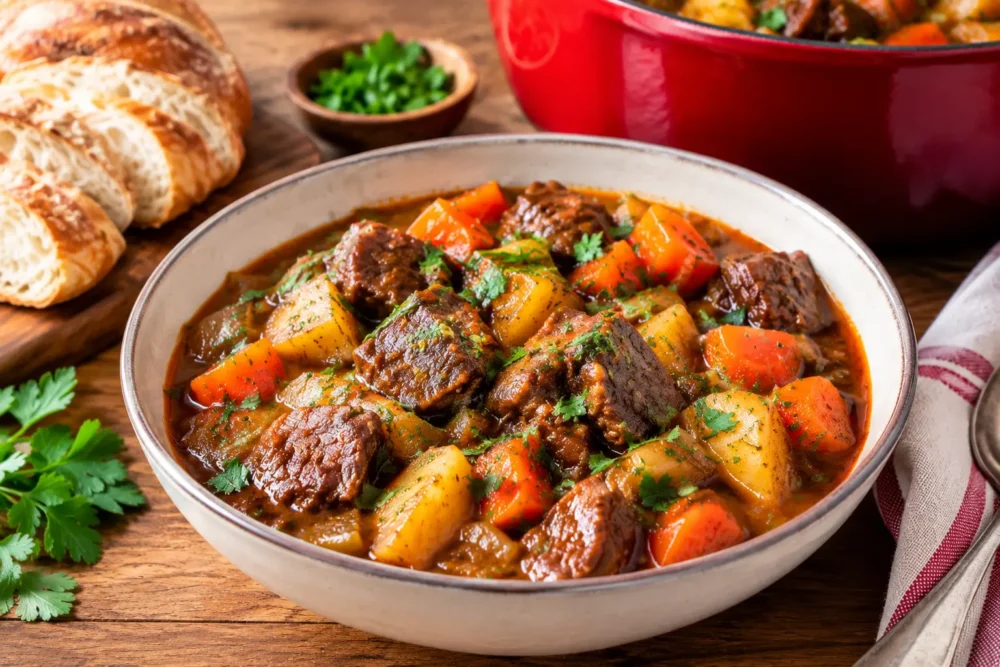
A good beef stew Dutch oven recipe turns simple ingredients into a deeply flavorful, comforting meal. The heavy pot is especially useful for stew because it holds heat steadily, making it ideal for browning beef first and then cooking it slowly until the meat becomes tender.
This guide explains how to make beef stew in a Dutch oven, from choosing the best cut of beef to building flavor, adding vegetables, and knowing when the stew is ready. You’ll also find practical tips for fixing common problems, storing leftovers, and serving your homemade beef stew.
What Makes beef stew dutch oven So Good?
A Dutch oven is well suited to beef stew because it can handle several stages of cooking in the same pot.
First, you can brown the beef directly in the Dutch oven. This creates a flavorful browned surface and leaves savory bits on the bottom of the pot. After the aromatics are cooked, liquid can be added to loosen those flavorful bits.
The thick walls of a Dutch oven also help maintain a steady cooking environment. Once the stew is brought to a gentle simmer, it can continue cooking slowly in the oven.
That slow cooking is important because stew commonly uses tougher beef cuts containing connective tissue. Given enough time at a gentle temperature, those cuts can become tender and richly flavored.
Best Beef for beef stew dutch oven
The best beef for stew is generally a well-marbled, tougher cut that benefits from slow cooking.
Good options include:
- Beef chuck: One of the best all-purpose choices for stew because it becomes tender during long cooking.
- Chuck roast: Cut it into stew-sized pieces yourself for control over cube size.
- Round: Leaner than chuck, but it can work if cooked carefully.
- Beef brisket: Can produce a rich stew but may have a different texture from traditional chuck-based stew.
For a classic homemade beef stew, chuck is usually the easiest choice. Cut the beef into relatively uniform pieces so they cook at a similar rate.
Beef Stew Dutch Oven Ingredients
The following ingredients create a traditional, savory stew with tender beef and hearty vegetables.
| Ingredient | Amount | Purpose or Notes |
| Beef chuck | 2 lb | Cut into about 1½-inch cubes |
| Olive oil | 2 tbsp | For browning the beef |
| Yellow onion | 1 large | Adds sweetness and savory flavor |
| Garlic | 3 cloves | Adds aroma |
| Carrots | 3 medium | Adds sweetness and texture |
| Celery | 2 stalks | Adds savory flavor |
| Potatoes | 1½ lb | Makes the stew hearty |
| Tomato paste | 2 tbsp | Adds depth and richness |
| All-purpose flour | 2 tbsp | Helps thicken the stew |
| Beef broth | 4 cups | Main cooking liquid |
| Worcestershire sauce | 1 tbsp | Adds savory depth |
| Dried thyme | 1 tsp | Adds herbal flavor |
| Bay leaves | 2 | Adds subtle aroma |
| Salt | To taste | Seasons the beef and stew |
| Black pepper | To taste | Adds seasoning |
| Fresh parsley | 2 tbsp | Optional garnish |
How to Make Beef Stew in a Dutch Oven
1. Prepare the beef
Pat the beef cubes dry with paper towels and season them with salt and black pepper.
Drying the surface is useful because excess moisture can interfere with browning. Letting the beef sit wet in the pot can cause it to steam instead of developing a good browned exterior.
2. Brown the beef
Heat the olive oil in a large Dutch oven over medium-high heat.
Add the beef in a single layer, leaving space between the pieces. Work in batches if necessary.
Brown the beef on several sides, then transfer it to a plate.
Why this matters: Browning gives the stew a deeper, more developed flavor. Avoid rushing this stage or overcrowding the pot.
3. Sauté the aromatics
Reduce the heat to medium. Add the chopped onion and celery to the same pot.
Cook until the vegetables begin to soften. Add the garlic and cook briefly until fragrant.
Stir in the tomato paste and cook for another minute or two.
4. Add the flour
Sprinkle the flour over the vegetables and stir well.
Cooking the flour briefly helps incorporate it into the stew rather than leaving a raw flour taste. It also helps the finished cooking liquid develop a thicker consistency.
5. Deglaze the Dutch oven
Slowly pour in some of the beef broth while scraping the bottom of the pot with a wooden spoon.
This process loosens the browned bits left behind by the beef and incorporates them into the cooking liquid.
6. Return the beef and add the broth
Put the browned beef back into the Dutch oven.
Add the remaining beef broth, Worcestershire sauce, thyme, and bay leaves. Stir gently.
The liquid should surround the ingredients without necessarily completely submerging every piece of food.
7. Begin the slow cooking
Bring the mixture to a gentle simmer on the stovetop.
Cover the Dutch oven with its lid and transfer it to a preheated 325°F (165°C) oven.
Cook until the beef is becoming tender.
8. Add the vegetables
Add the potatoes and carrots during the later part of cooking rather than putting everything into the pot from the beginning.
This timing keeps the vegetables from turning too soft while giving the beef enough time to become tender and flavorful.
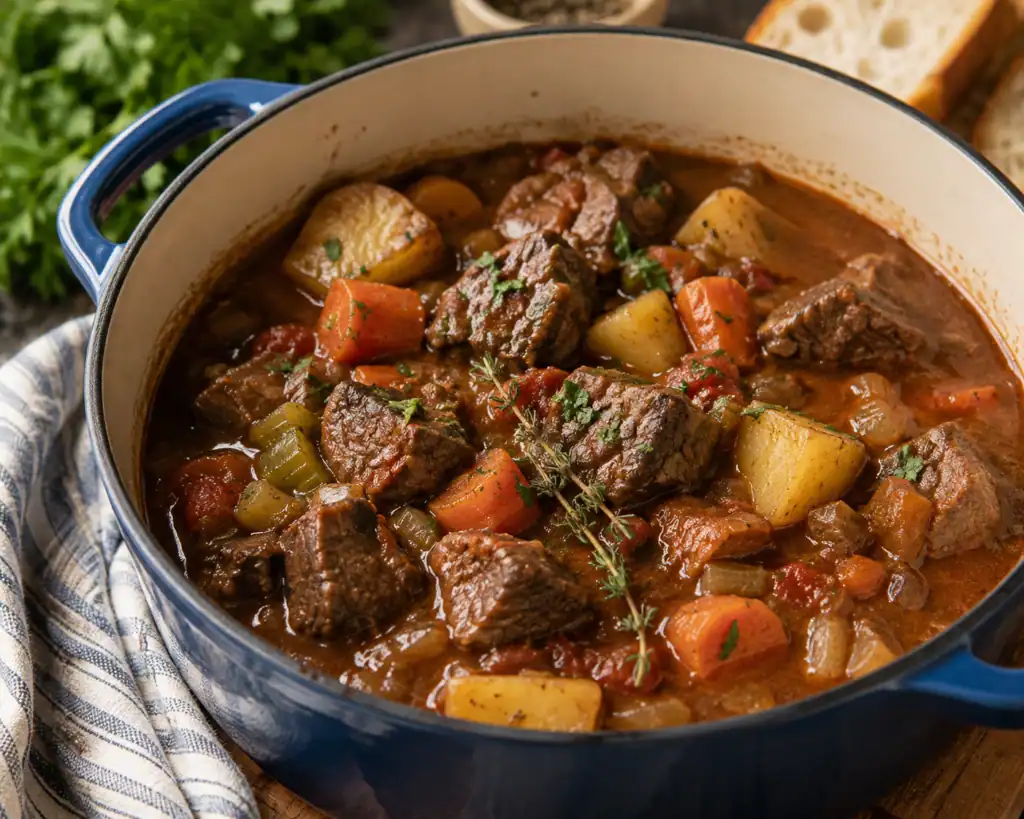
Return the covered Dutch oven to the oven and continue cooking until the beef is fork-tender and the vegetables are cooked through.
9. Check the stew
Remove the Dutch oven from the oven carefully.
Give the broth a quick taste, then add more salt or pepper if needed to bring the flavors into balance.
Remove the bay leaves before serving.
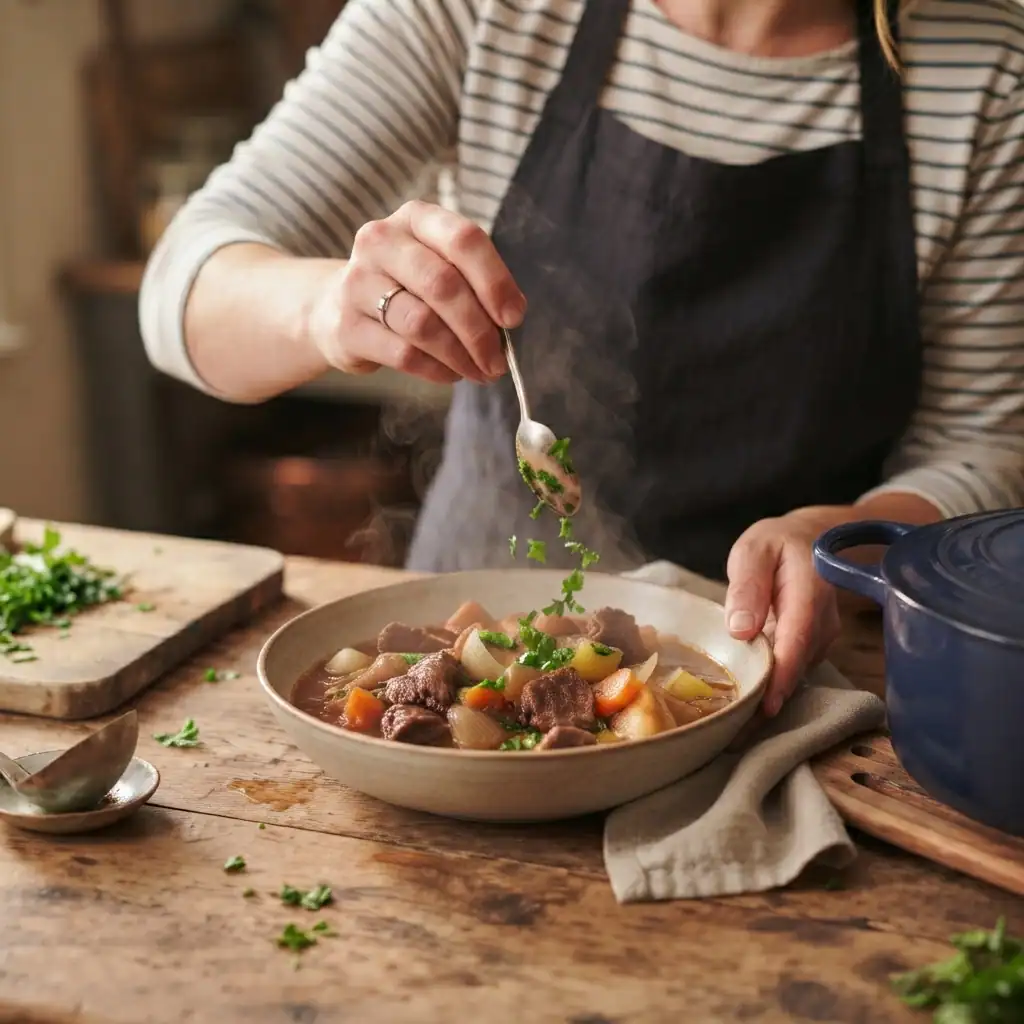
If desired, sprinkle fresh parsley over each bowl.
How Much Cooking Time Does beef stew dutch oven Need?
A Dutch oven beef stew commonly needs around 2½ to 3½ hours in a 325°F (165°C) oven, although the exact time can vary.
The important point is that time alone should not determine whether the stew is finished.
Several factors affect cooking time:
| Factor | Effect on Cooking |
| Beef cut | Different cuts soften at different rates |
| Cube size | Larger pieces generally need more time |
| Oven temperature | Lower temperatures usually require longer cooking |
| Amount of liquid | Affects the cooking environment |
| Pot size and lid | Can influence heat and moisture retention |
The best indicator is texture. Properly cooked stew beef should be tender enough to break apart easily with a fork. If it is still chewy or resistant, it usually needs more gentle cooking time.
Tips for Tender, Flavorful Beef Stew
Don’t overcrowd the pot
Too much beef in the Dutch oven at once can lower the surface temperature and prevent proper browning.
Brown the beef in batches when necessary.
Don’t aggressively boil the stew
A strong boil can produce a less desirable texture. Once the stew reaches a simmer, maintain a gentle cooking environment.
Give tough beef enough time
If your beef is still tough, don’t assume it needs less cooking. Tough stew meat can remain firm for much of the cooking process before becoming tender.
Continue cooking gently and check it periodically.
Use enough liquid, but don’t flood the stew
The broth should provide enough moisture for slow cooking without turning the dish into a thin soup.
Season throughout the process
Seasoning the beef before browning establishes a flavorful base. Taste the finished broth toward the end and make final adjustments.
Cut vegetables consistently
Cut the potatoes and carrots into roughly equal-sized pieces so they cook at a similar rate. This helps them cook more evenly.
Common Mistakes to Avoid
Skipping the browning step: Adding raw beef directly to the broth can result in less developed flavor.
Overcrowding the Dutch oven: Brown the beef in batches instead.
Cutting the beef too small: Small pieces can become overcooked while the stew develops.
Adding delicate vegetables too early: Some vegetables can become excessively soft during a long cooking period.
Using too much liquid: Excess broth can make the finished stew thinner than intended.
Stopping when the beef is still tough: Beef stew often needs patience. If the beef isn’t tender, continue cooking gently.
Easy Substitutions and Variations
You can adapt this beef stew recipe based on what you have available.
Vegetable substitutions
Instead of traditional carrots and potatoes, you can use:
- Parsnips
- Turnips
- Mushrooms
- Sweet potatoes
- Frozen peas
Add quick-cooking vegetables later so they retain more texture.
Broth substitutions
Beef broth gives the most traditional flavor, but low-sodium beef stock can also work. If using a salty broth, wait until the end before making major seasoning adjustments.
Gluten-free option
For a gluten-free stew, replace the all-purpose flour with a suitable gluten-free thickener. Always check packaged ingredients if gluten avoidance is important.
Herb variations
Thyme works particularly well, but rosemary or a small amount of dried Italian-style herbs can also change the flavor profile.
What to Serve With Dutch Oven Beef Stew
Beef stew is filling on its own, but a simple side can make it a complete meal.
Good options include:
- Crusty homemade bread
- Mashed potatoes
- Steamed rice
- Roasted vegetables
- Green salad
- Warm dinner rolls
Bread is particularly useful for soaking up the flavorful broth.
Internal linking opportunity for DocCuisine: Link naturally from “mashed potatoes,” “homemade bread,” and “roasted vegetables” to relevant DocCuisine recipes when those pages are available.
How to Store and Reheat Beef Stew
Once the stew has cooled properly, divide it into shallow, airtight containers and place it in the refrigerator without unnecessary delay. For safe storage, plan to enjoy refrigerated leftovers within 3 to 4 days. If you need to keep the stew longer, freezing it is a convenient option.
When freezing, leave some space in the container because liquids expand as they freeze.
To thaw
For best food safety, thaw frozen stew in the refrigerator rather than leaving it at room temperature.
To reheat
Reheat the stew thoroughly on the stovetop or in the microwave, stirring as needed so the food heats evenly.
If the stew becomes noticeably thicker while chilled, loosen it during reheating with a small splash of broth or water until it reaches the consistency you prefer.
Troubleshooting Your Beef Stew
| Problem | What to Do |
| Beef is still tough | Continue slow cooking until it becomes fork-tender |
| Stew is too thin | Simmer uncovered for a short period to reduce excess liquid, or use an appropriate thickener |
| Stew is too thick | Stir in a little warm broth or water |
| Vegetables are too soft | Add them later next time and use larger pieces |
| Flavor is too mild | Taste first, then gradually adjust salt, pepper, herbs, or Worcestershire sauce |
| Beef didn’t brown | Make sure the beef is dry and brown it in smaller batches |
Recipe Card: Dutch Oven Beef Stew
| Information | Details |
| Prep Time | 25 minutes |
| Cook Time | About 2½–3½ hours |
| Total Time | About 3–4 hours |
| Servings | 6 |
| Cuisine | American-inspired |
| Course | Main Course |
Ingredients
| Ingredient | Amount | Notes |
| Beef chuck | 2 lb | 1½-inch cubes |
| Olive oil | 2 tbsp | For browning |
| Yellow onion | 1 large | Chopped |
| Garlic | 3 cloves | Minced |
| Carrots | 3 medium | Chopped |
| Celery | 2 stalks | Chopped |
| Potatoes | 1½ lb | Cut into chunks |
| Tomato paste | 2 tbsp | |
| All-purpose flour | 2 tbsp | |
| Beef broth | 4 cups | |
| Worcestershire sauce | 1 tbsp | |
| Dried thyme | 1 tsp | |
| Bay leaves | 2 | Remove before serving |
| Salt | To taste | |
| Black pepper | To taste | |
| Fresh parsley | 2 tbsp | Optional |
Instructions
- Pat the beef dry and season with salt and pepper.
- Heat olive oil in a Dutch oven and brown the beef in batches. Transfer the beef to a plate.
- Cook the onion and celery until softened, then add garlic.
- Stir in tomato paste and cook briefly.
- Sprinkle in flour and stir until the vegetables are coated.
- Add some beef broth and scrape the browned bits from the bottom.
- Return the beef to the pot and add the remaining broth, Worcestershire sauce, thyme, and bay leaves.
- Bring the stew to a gentle simmer.
- Cover and cook in a 325°F (165°C) oven.
- Add the carrots and potatoes during the later stage of cooking.
- Continue cooking until the beef is fork-tender and the vegetables are cooked through.
- Taste, adjust seasoning, remove the bay leaves, and garnish with parsley.
Frequently Asked Questions
How long does beef stew take in a Dutch oven?
A typical Dutch oven beef stew can take approximately 2½ to 3½ hours at 325°F (165°C). Cooking time varies according to the beef cut, cube size, oven, and other ingredients. The stew is ready when the beef is fork-tender.
What is the best beef for Dutch oven stew?
Beef chuck is an excellent choice because its texture and connective tissue are well suited to slow cooking. It can become tender and flavorful when cooked gently for enough time.
Can you make beef stew in the oven?
Yes. After browning the beef and building the stew on the stovetop, you can cover the Dutch oven and transfer it to the oven for slow cooking.
Should beef stew be covered in a Dutch oven?
Generally, yes. Keeping the Dutch oven covered helps retain moisture during the long cooking process. You can remove the lid near the end if you need to reduce excess liquid.
Why is my beef stew meat still tough?
The beef may simply need more cooking time. Tough cuts often become tender gradually during slow cooking. Keep the stew at a gentle temperature and continue cooking until the meat is fork-tender.
Can Dutch oven beef stew be frozen?
Yes. Once properly cooled, beef stew can be stored in airtight freezer-safe containers. Thaw it in the refrigerator and reheat thoroughly before serving.
How do you thicken beef stew?
If your stew is too thin, you can reduce some of the liquid by simmering uncovered. Alternatively, a suitable thickener can be added according to the desired consistency.
Can I add vegetables at the beginning?
You can, but long cooking can make some vegetables very soft. For better texture, add potatoes and carrots during the later portion of cooking.
Conclusion
A beef stew Dutch oven method is a reliable way to build rich flavor while giving tougher beef cuts the time they need to become tender. The key techniques are straightforward: dry and brown the beef properly, sauté the aromatics, deglaze the pot, use the right amount of liquid, and cook the stew gently until the beef is fork-tender.
Once you understand these steps, you can easily adjust the vegetables, herbs, and seasonings to suit your preferences.
Try this comforting homemade beef stew, then explore more hearty recipes here at DocCuisine for your next home-cooked meal.