Baked Chicken Parmesan: 7 Foolproof Crispy Tender Tips
Table of Contents
You pull the tray out expecting a golden, crackling crust — and instead the breading has gone limp under the sauce. Or the coating looks perfect, but slice into the chicken and it’s dry in the middle.
Both problems come down to the same thing: moisture. Where it sits, when it shows up, and how much of it you let near the breading before it’s had a chance to crisp.
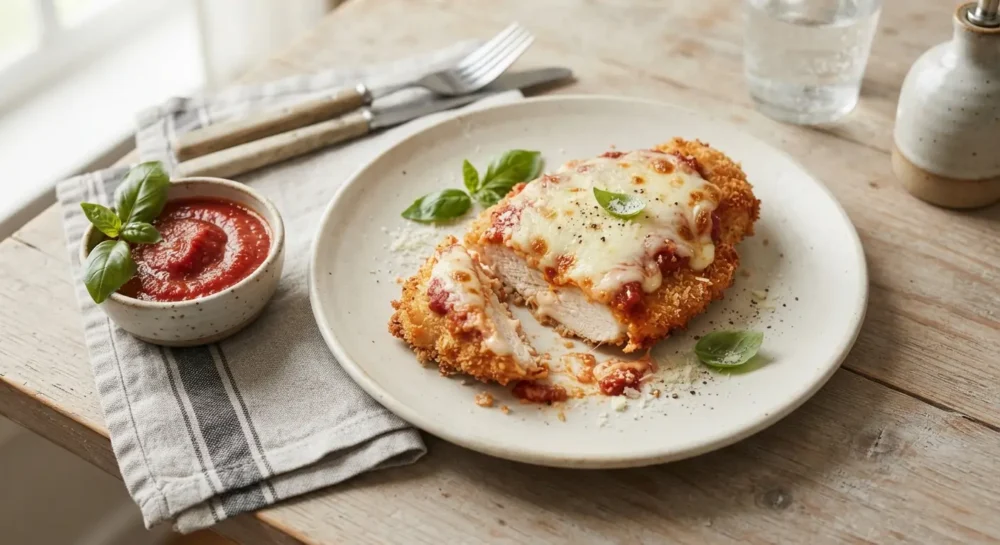
This baked chicken parmesan version gets you there without a deep fryer. Golden breading, juicy chicken, a tangy marinara, melted mozzarella — all built in the oven, with a few technique fixes that make the difference between “fine” and genuinely crispy.
At DocCuisine, the approach is food first, medicine second: enjoy the dish, and understand where it fits into how you actually eat.
Medical Angle: Where Baked Chicken Parmesan Fits
baked Chicken parmesan isn’t a health food, and it doesn’t need to pretend to be one. But it’s also not automatically off-limits.
Chicken breast is a genuinely lean protein source — the USDA lists a 3.5-ounce cooked, skinless portion at roughly 31 grams of protein and under 4 grams of fat. Protein does real metabolic work beyond muscle repair: a study in the journal Obesity found that higher-protein meals produced stronger, more consistent fullness signals than lower-protein ones, and research in Nutrition Journal found that swapping carbohydrate for protein at a meal blunted the post-meal blood sugar and insulin spike that followed. That’s relevant to a dish like this one, where the protein source is the anchor of the plate.
The sauce contributes something too. Tomatoes are one of the most concentrated dietary sources of lycopene, and a review in Oxidative Medicine and Cellular Longevity linked lycopene intake to favorable changes in blood lipids, inflammation markers, and blood vessel function — though the same body of research is honest that human trials haven’t nailed down a direct cause-and-effect relationship yet.
What actually swings this dish toward “fits your day” or “doesn’t” is usually the rest of the plate, not the chicken itself. Breading, cheese, and jarred sauce all carry sodium, and pasta or garlic bread on the side adds a second carbohydrate source on top of the breading. The American Heart Association recommends capping sodium at 2,300 mg a day for most adults, with 1,500 mg as an ideal ceiling for many people — worth knowing since a single restaurant-style chicken parm can approach or exceed that on its own. The American Diabetes Association’s “plate method” is a simple way to rebalance: half the plate as non-starchy vegetables, a quarter as protein, a quarter as a portioned carbohydrate.
So instead of asking “is baked chicken parmesan healthy,” a more useful question is: what’s on the plate around it, and how much of it are you serving yourself?
What Actually Makes Baked Chicken Parmesan Crispy and Tender
A handful of small choices separate soggy baked chicken parmesan from the real thing.
1. Start with even chicken.
A whole breast is thick in the center and thin at the edges. Slice it horizontally into two thinner cutlets, or pound it to an even thickness with a mallet or the bottom of a heavy pan. Even thickness means even cooking — no dry, overdone edges next to an undercooked middle.
2. Dry the surface before breading.
Pat both sides with paper towels. You’re not trying to remove every trace of moisture — just enough that the coating doesn’t slide around or clump when it hits the flour.
3. Bread in three steps, in order.
Flour goes on first, giving the egg a surface to cling to Egg wash second, as the glue. Seasoned breadcrumbs last, pressed on firmly. Miss a step, or lay any layer on too heavy, and the coating tends to peel away in the oven rather than bonding to the chicken
4. Toast the breadcrumbs before you use them.
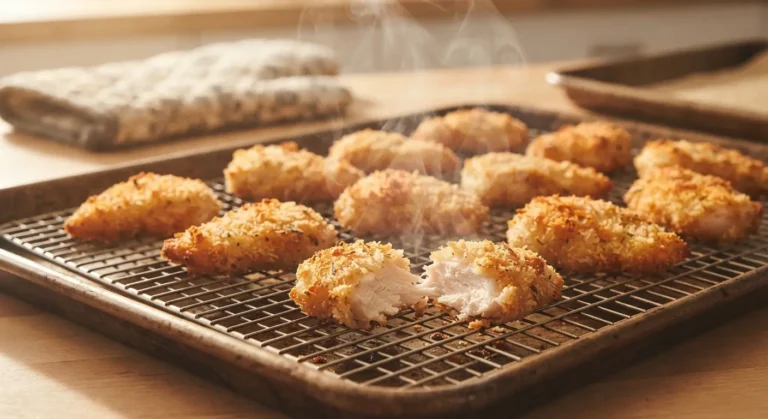
This is the single highest-leverage trick in the whole recipe. Toss panko with a tablespoon of olive oil and toast it in a dry skillet over medium heat until it’s light gold, then let it cool before breading. Because the crumbs are already partway browned, they finish deeply golden in the oven without needing extra time — which means the chicken underneath doesn’t overcook while you wait for color.
5. Give each piece room.
Crowd the pan and the chicken steams instead of roasts, because trapped moisture has nowhere to go. Space the pieces out, and use a wire rack set inside a baking sheet if you have one — air gets underneath the chicken instead of just around it.
6. Go easy on the sauce.
A thin, generous coat of marinara adds flavor. A thick layer smothers the crust and softens it within minutes. Spoon it on, don’t pour it.
7. Add the cheese last.
Mozzarella releases moisture as it melts. Let the coating fully crisp first, then top with sauce and cheese only for the final few minutes of baking.
Baked Chicken Parmesan Ingredients(Serves 4)

| Ingredient | Amount | Notes |
| Boneless, skinless chicken breasts | 1½ lb | Sliced or pounded to even thickness |
| Panko breadcrumbs | 1 cup | Toasted before breading |
| Grated Parmesan cheese | ½ cup | Mixed into the breading |
| Part-skim mozzarella | 4 oz, shredded | Added at the end |
| Large egg | 1 | Beaten, for dredging |
| All-purpose flour | ⅓ cup | Or a gluten-free 1:1 blend |
| Olive oil | 2 tbsp | Split between toasting crumbs and baking |
| Marinara sauce | 1 cup | Compare sodium per serving across labels before you buy |
| Garlic powder | 1 tsp | |
| Italian seasoning | 1 tsp | |
| Black pepper | ½ tsp | |
| Salt | Small amount, optional |
Easy swaps:
- More whole grains: whole-wheat panko instead of regular
- Lower sodium: a lower-sodium marinara, and comparing labels between breadcrumb and cheese brands
- Gluten-free: gluten-free flour and certified gluten-free breadcrumbs
- Lighter topping: part-skim mozzarella, and keeping the portion to what’s listed rather than piling it on
How to Make Baked Chicken Parmesan
Prepare the chicken. Preheat the oven to 425°F (220°C). Slice or pound the chicken to even thickness, pat dry, and season both sides with garlic powder, Italian seasoning, pepper, and salt if using.
Build the coating. Toast the panko in 1 tablespoon of olive oil until lightly golden, then let it cool and mix with the Parmesan. Set up three shallow bowls: flour, beaten egg, and the toasted crumb mixture.
Bread each piece. Coat in flour, then egg, then press firmly into the crumb mixture so it adheres.
Bake to set the crust. Arrange the chicken with space between pieces on an oiled baking sheet or a wire rack. Bake until golden and cooked through — the exact time depends on thickness, so check with a thermometer rather than the clock. The USDA’s food safety guidance sets 165°F (73.9°C) as the target internal temperature for cooked poultry.
Add the marinara and mozzarella. Pull the tray out, spoon a moderate amount of sauce over each cutlet, top with mozzarella, and return to the oven just until the cheese melts. A quick pass under the broiler at the end adds color — watch it closely, since it browns fast.
Rest, then serve. A few minutes of resting lets the topping settle so it doesn’t slide off the second you cut in.
Getting Baked Chicken Parmesan Crispy Without a Fryer— the Short Version
- Dry the chicken before breading
- Toast the breadcrumbs first
- Use oil sparingly, not a pool of it
- Leave space between pieces (or use a rack)
- Let the oven fully preheat before adding the chicken
- Keep the sauce to a moderate amount
- Add cheese only near the end
- Never cover the pan while it bakes
Every item on that list is really the same principle applied in a different spot: control the moisture, and the crunch takes care of itself.
Keeping Baked Chicken Parmesan Tender, Not Dry
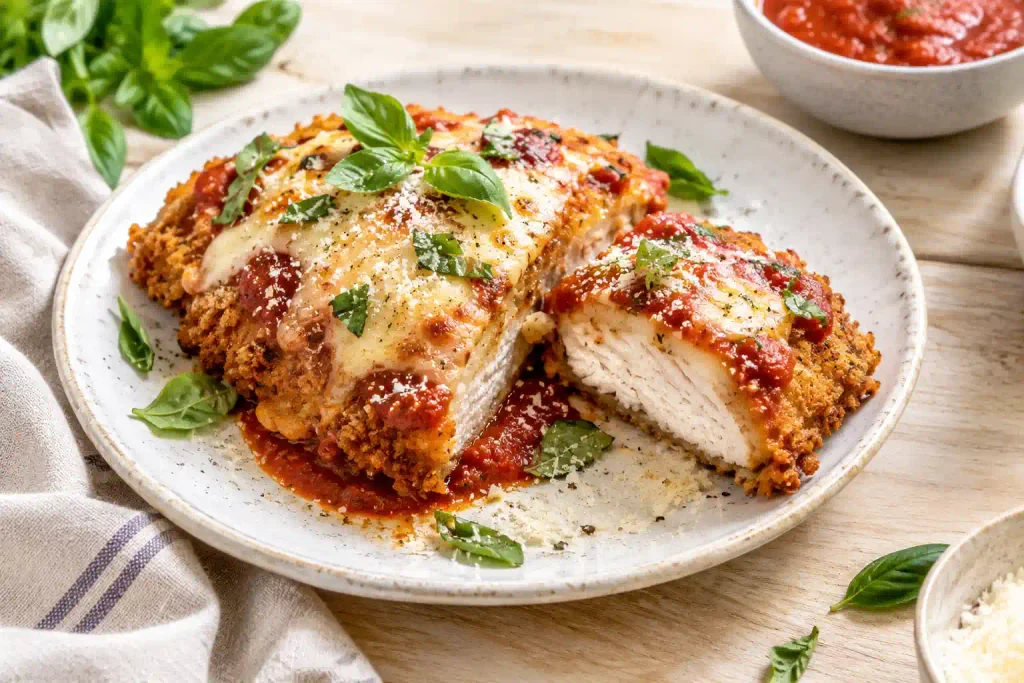
Crispy breading gets the attention, but a dry interior ruins the dish just as fast.
Even thickness matters more than exact cook time. Two cutlets of different thickness on the same tray will finish at different moments — the thin one first, the thick one later. A thermometer resolves the guesswork a clock can’t.
Stop cooking once you hit temperature. Once the chicken reads 165°F internally, there’s no upside to leaving it in longer “just to be sure.” That’s usually the moment dry, stringy texture starts.
Let it rest. Five minutes off the heat lets juices that were pushed toward the center during cooking settle back through the meat instead of running out onto the cutting board.
Nutrition Facts for Baked Chicken Parmesan (Per Serving)
Approximate values; actual numbers depend on the exact chicken breast size and the specific breadcrumb, sauce, and cheese brands used.
| Nutrient | Approx. per serving |
| Calories | ~520 kcal |
| Protein | ~48 g |
| Carbohydrates | ~28 g |
| Fiber | ~2 g |
| Sugar | ~6 g |
| Sodium | ~750 mg |
For an exact figure to publish, run the final recipe through a nutrition calculator using the specific products in your kitchen — sodium in particular swings widely between marinara and cheese brands.
Which Eating Patterns Does This Baked Chicken Parmesan Fit?
| Eating pattern | How this recipe fits |
| High-protein | Chicken and cheese carry a substantial protein load per serving |
| Lower-sodium | Swap in a low-sodium marinara and go light on added salt |
| Heart-conscious | Baked rather than fried, with cheese as a controlled topping rather than a blanket |
| Diabetes-conscious | Portion the breading and any carb sides; pair with the ADA’s plate-method ratios |
| Gluten-free | Use gluten-free flour and breadcrumbs |
| Lower-carb | Trim the breading, skip the pasta side |
This isn’t a list of guarantees — individual needs vary, especially for anyone managing diabetes, kidney disease, or hypertension. Think of it as a starting point for how the recipe can flex, not a diagnosis of what it does for you.
Mistakes That Cause Sogginess
- Breading chicken that’s still visibly wet
- Skipping the toasting step and using raw panko straight from the box
- Crowding the pan so pieces touch
- Drowning the chicken in sauce instead of spooning it on
- Adding cheese before the crust has had time to set
- Covering the pan, which traps steam
- Judging doneness by the clock instead of a thermometer
Storage and Reheating
Get leftovers into an airtight container and into the fridge within two hours of cooking; they’ll keep for 3–4 days.USDA guidance recommends reheating leftovers to an internal temperature of 165°F.
For better texture, skip the microwave and reheat uncovered in an oven or air fryer instead — the dry heat brings back some of the original crunch, while a microwave tends to leave the coating soft and steamed . If you’re planning to have leftovers, storing the sauce separately and adding it after reheating keeps more of the crust intact.
Frequently Asked Questions
How long does baked chicken parmesan take in the oven? It depends on how thick the chicken is and how your oven runs, so there’s no single reliable number. Check the thickest part with a thermometer and pull it once it reads 165°F.
Should I cover the pan while it bakes? No. Covering traps steam, and steam is exactly what softens a crust you just spent effort building.
Can I make this without any oil at all? You can skip the oil in the crumbs, but expect a paler, less crisp result — the small amount of oil helps the breadcrumbs brown rather than just dry out.
Is baked chicken parmesan actually bad for your heart? Not inherently — that reputation comes from how it’s usually prepared, not the ingredients themselves. A version built with lean chicken, a controlled cheese portion, and a lower-sodium sauce looks very different, nutritionally, from a deep-fried restaurant plate buried under a double layer of cheese.
Can I prep this ahead of time? Yes. Bread the chicken up to a day ahead and refrigerate it uncovered on a rack so the coating doesn’t get soggy waiting. You can also fully bake it, then add fresh sauce and cheese during reheating.
Does eating baked chicken parmesan cause inflammation? There’s no solid basis for pinning an inflammatory effect on a single dish eaten occasionally. Diet research generally looks at overall eating patterns over time, not at labeling one mixed meal as “inflammatory” in isolation.
A quick note: This article is for general educational purposes and isn’t a substitute for personalized medical or nutrition advice. If you’re managing diabetes, high blood pressure, kidney disease, a food allergy, or another condition, talk with your doctor or a registered dietitian before making significant changes to how you eat.
Conclusion
Good baked chicken parmesan really comes down to a handful of decisions: even chicken, a dry surface, toasted crumbs, enough space in the pan, a light hand with the sauce, and cheese added at the end instead of the beginning. None of it requires a fryer, and none of it asks you to give up the thing that makes the dish worth making in the first place.
You don’t need to turn a comfort-food favorite into something unrecognizable to make it fit your week. Cooking it yourself just means you’re the one deciding how much oil, salt, and cheese actually end up on the plate — and what you serve alongside it.
Food first, medicine second.
Got a trick that makes your baked chicken parmesan extra crispy? Drop it in the comments, and pass this one along to whoever in your life loves a golden, cheesy dinner. For more practical, evidence-grounded recipes, subscribe to the DocCuisine newsletter.
What Readers Think :
There are no reviews yet. Be the first one to write one.