
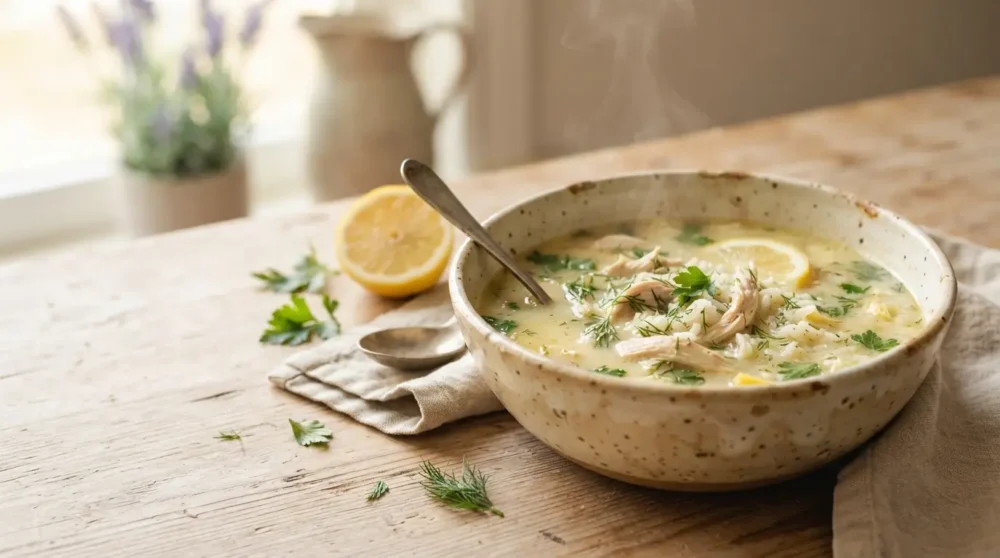
Greek Chicken Lemon Rice Soup: How to Make It (The Avgolemono Cure)
There’s a particular kind of tired that shows up around week three of exam block — not sleepy exactly, more like your whole body has quietly voted to shut down for repairs. Last winter, that tired arrived with a scratchy throat and the kind of low-grade ache that makes you question every decision that led you to a life of 6am rounds and evening study sessions.
I didn’t want to cook. I barely wanted to stand. But I had chicken, rice, eggs, and a lemon that had been sitting on the counter looking unbothered by my crisis, and somewhere in my notes from a nutrition elective was a half-remembered line about broth and hydration and recovery.
That’s when Greek chicken lemon rice soup came to mind.
So I made soup. Not the canned kind — the Greek kind, avgolemono, the one where you temper eggs into hot broth until it turns silky and pale gold, and the whole kitchen smells like lemon and thyme. I ate it standing at the counter because I didn’t have the energy to sit at a table like a person with dignity.
And it helped — not in a dramatic, movie-montage way, but in the quiet, physiological way that warm fluids and protein and a little citrus tend to help a tired body.
That soup became a fixture. Not just for sick days — for the nights when I want something that feels like care in a bowl, minus the sodium bomb of a can and minus the hour-long production of a “real” recipe.
This is that soup, written the way I wish someone had explained it to me the first time: with the technique demystified, the health angle explained honestly, and nothing oversold.
Table of Contents
Doctor’s Note: Why This Soup Actually Helps
I want to be careful here, because “healing soup” claims get thrown around a lot, and most of them outrun the evidence. So here’s the honest version.
Chicken soup isn’t a cure for anything. But Mayo Clinic’s patient guidance on colds specifically recommends warm fluids like chicken soup, tea, or warm lemon water — because they help loosen congestion and keep you hydrated, while liquids more broadly help prevent the dehydration that colds and fevers tend to cause.
That’s not folklore, that’s fairly mainstream clinical advice,and it’s a big part of why this Greek chicken lemon rice soup earns its place beyond nostalgia.
What Each Ingredient Brings to the Bowl
- The broth delivers fluid and electrolytes at a moment when plain water can feel unappealing or insufficient — useful whether you’re sick, hungover, or just depleted after a long shift.
- The chicken is lean protein your body needs for tissue repair and normal immune function, without the saturated fat load of fattier cuts.
- The rice is a gentle, low-fiber carbohydrate — easy on a stressed digestive system, which is part of why bland, starchy foods show up so often in “sick day” food traditions across cultures.
- The lemon provides vitamin C, and per NIH’s Office of Dietary Supplements, vitamin C is essential to normal physiological function and acts as an antioxidant in the body — it’s not a magic immune switch, but it’s a nutrient your body can’t make on its own, so getting it from food is genuinely useful, not just trendy.
None of this makes the soup medicine. It makes it a genuinely sound nutritional choice, which — as far as I’m concerned — is a much more honest thing to promise you.
What Is Greek Chicken Lemon Rice Soup, Exactly?
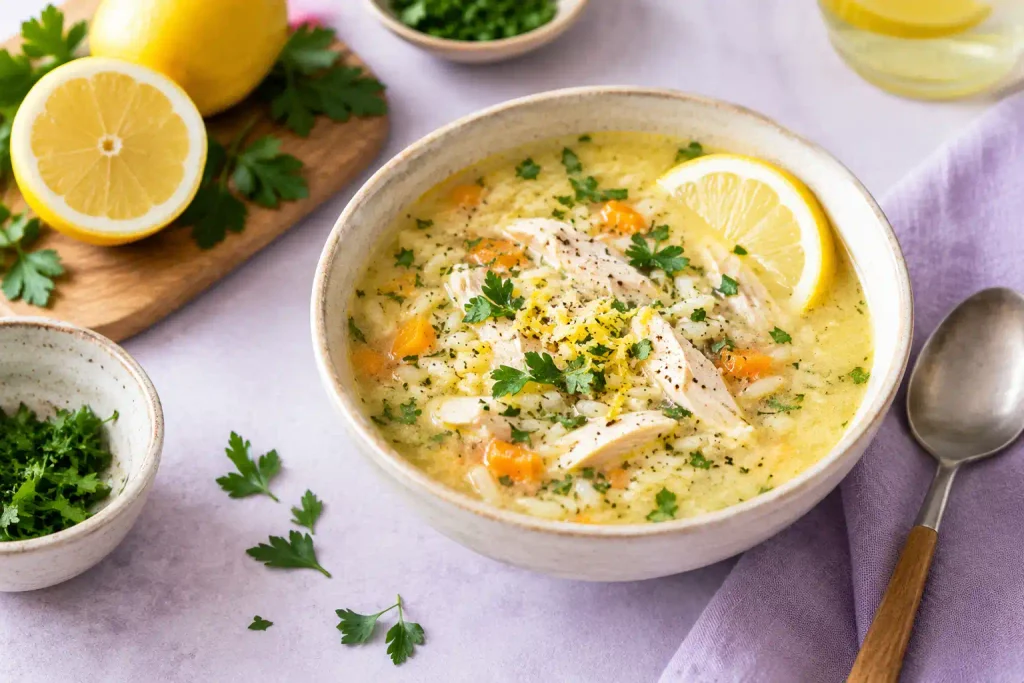
Avgolemono — literally “egg-lemon” in Greek — refers to the technique at the heart of this dish, not just the soup itself. The same egg-lemon method shows up across Greek cooking, from sauces to other soups, and it’s what separates this dish from a standard chicken noodle situation.
What makes it distinct isn’t the chicken or the rice — it’s the finishing technique: whisked eggs and lemon juice, slowly warmed with hot broth, then stirred back into the pot.
Done right, it turns thin broth into something with real body and a silky, almost custardy texture, without a drop of cream.
Done wrong, you get scrambled egg flecks floating in soup.
We’ll fix that problem before it happens.
The Science of the Egg-Lemon Emulsion: Why It Doesn’t Curdle
Eggs curdle when they’re exposed to sudden, high heat — the proteins seize up and clump instead of smoothly thickening the liquid around them.
The fix is a classic culinary technique called tempering: you slowly introduce small amounts of hot liquid into the egg mixture first, raising its temperature gradually, before combining everything back into the main pot.
This gives the egg proteins time to unfold and set slowly, which is what gives avgolemono its velvety consistency instead of a curdled mess.
We’ll walk through this step by step below, because it’s the one place people actually mess this recipe up.
Health Benefits Breakdown
Here’s what Greek chicken lemon rice soup actually offers, broken down by benefit.
Heart Health
Made with skinless chicken breast and a broth you control, this soup is naturally lower in saturated fat than most creamy soups, while still delivering real satiety from protein.
Choosing lean protein sources and limiting saturated fat is a consistent thread in general dietary guidance for cardiovascular health — this soup fits that pattern without asking you to give up something rich and comforting.
Blood Sugar Considerations
Rice alone is a fairly fast-digesting carbohydrate, but pairing it with protein (chicken, eggs) and a moderate portion size slows the overall digestion and blunts the impact on blood sugar compared to eating refined carbs on their own.
If you’re managing blood sugar closely, using a smaller rice portion or swapping in brown rice (more on that below) gives you more room to enjoy the dish without spiking as hard.
Digestive Comfort
This is a genuinely low-residue, low-fiber meal — soft chicken, well-cooked rice, smooth broth.
That’s exactly the profile that tends to sit well when your GI system is irritated, whether from illness, stress, or recovery from a stomach bug.
It’s part of why “bland” foods are so consistently recommended during GI upset — they ask very little of a digestive system that’s already working hard.
An Honest Anti-Inflammatory Angle
Lemon, garlic, and fresh herbs like dill or parsley aren’t going to single-handedly reduce systemic inflammation.
But dietary patterns rich in whole foods, healthy fats, and plant compounds — the kind found in Mediterranean-style eating, which this soup fits neatly into — are consistently associated with better markers of inflammation over time.
Think of this soup as one small, repeatable brick in that pattern, not a fix on its own.
Ingredients You’ll Need for Greek Chicken Lemon Rice Soup
Here’s everything you’ll need to make Greek chicken lemon rice soup at home.
Core Ingredients
- Bone-in or boneless chicken breast (thighs work too, for a richer flavor)
- Low-sodium chicken broth
- White rice (short or long grain both work)
- Eggs
- Fresh lemon juice — bottled lemon juice won’t give you the same brightness
- Salt and black pepper
- Fresh dill or parsley, for finishing
Optional Swaps
- Brown rice instead of white, for more fiber (adjust cook time — it takes longer)
- Orzo instead of rice, for a more traditional Greek variation
- Dairy-free by default — this recipe never needed dairy in the first place, so no substitution required
- Extra vegetables like carrots or celery, if you want more texture and fiber without changing the character of the dish
Ingredients at a Glance
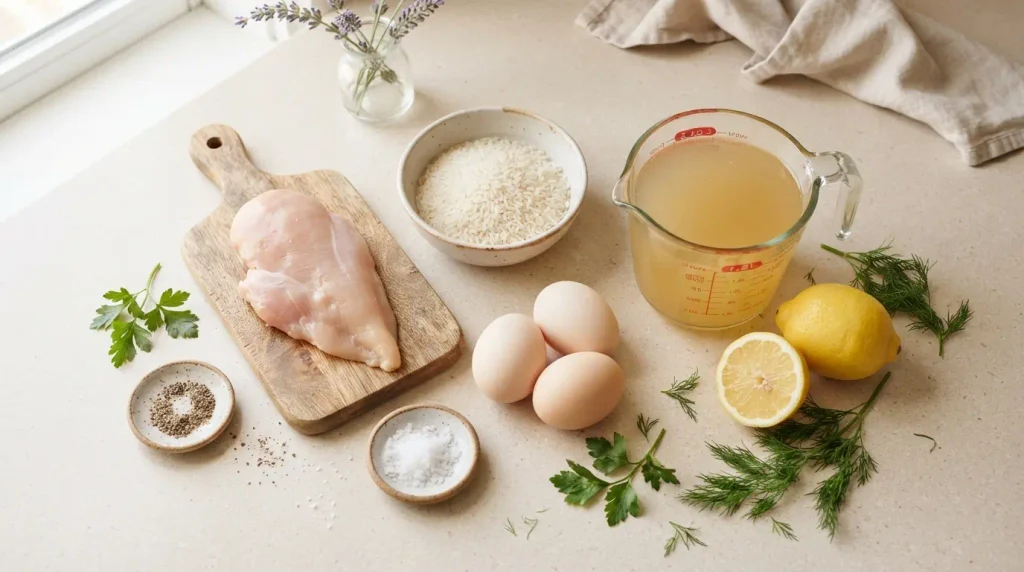
| Ingredient | Amount | Notes |
| Chicken breast, skinless | 1 lb (450g) | Boneless preferred for ease |
| Low-sodium chicken broth | 8 cups | Homemade or store-bought |
| White rice | 3/4 cup | Rinsed |
| Eggs | 3 large | Room temperature works best |
| Fresh lemon juice | 1/3 cup (about 2 lemons) | Adjust to taste |
| Salt | 1 tsp, plus more to taste | Reduce further for low-sodium diets |
| Black pepper | 1/2 tsp | |
| Fresh dill or parsley | 2 tbsp, chopped | For garnish |
How to Make Greek Chicken Lemon Rice Soup (Step-by-Step)
Step 1: Cook the Chicken and Build the Broth Base
Heat the broth in a large pot until it reaches a gentle simmer.
Add the chicken breast and poach it — don’t boil hard, just a slow simmer — for about 15–18 minutes, until it’s cooked through.
Remove the chicken, let it rest a few minutes, then shred or dice it.
Keep the broth simmering.
Step 2: Cook the Rice Directly in the Broth
Add the rinsed rice to the simmering broth and cook until tender, roughly 15–18 minutes for white rice.
This step does double duty — the rice releases a little starch into the broth, which helps the final soup feel thicker and more cohesive later.
Step 3: Make the Egg-Lemon Tempering Mixture
In a separate bowl, whisk the eggs until light and frothy, then stir in the lemon juice.
Now, ladle about 1 cup of the hot broth into the egg mixture in a slow, steady stream while whisking constantly.
This is the tempering step.
Whisking while pouring keeps the eggs from seizing up on contact with the heat.
Common mistake to avoid: Pouring the hot broth in all at once, or not whisking while you pour. Either one will scramble your eggs instead of creating a smooth emulsion. Go slow — it takes less than a minute and it’s the difference between silky soup and soup with egg bits floating in it.
Step 4: Combine and Finish
With the pot off the heat (or on the lowest possible setting), slowly pour the tempered egg-lemon mixture back into the soup, stirring constantly.
Add the shredded chicken back in, season with salt and pepper to taste, and let everything sit for a couple of minutes to come together — it will thicken slightly as it settles.
Do not let it boil after this point, or you risk curdling.
Finish with fresh dill or parsley, then serve warm.
Nutrition Facts for Greek Chicken Lemon Rice Soup
Per serving — makes 6 servings
| Nutrient | Amount |
| Calories | ~260 kcal |
| Protein | ~22g |
| Carbohydrates | ~22g |
| Fiber | ~1g |
| Sugar | ~2g |
| Sodium | ~480mg |
Values are estimates based on the specific ingredients and quantities listed above, calculated using standard nutrition data from USDA FoodData Central. Actual values will vary based on brands used, portion size, and any substitutions.
Which Diets Does Greek Chicken Lemon Rice Soup Fit?
- Heart-conscious — made with lean chicken breast and low-sodium broth, which can help keep saturated fat and sodium lower than in many richer soup options.
- High-protein — thanks to both the chicken and the eggs
- Diabetic-friendly — with portion awareness on the rice, or a brown rice swap
- Low-sodium adaptable — fully controllable when made with low-sodium broth and measured salt
- Anti-inflammatory-friendly — fits neatly into a Mediterranean-style eating pattern
- Gluten-free — naturally, as long as you stick with rice rather than the orzo variation
How to Store and Reheat Greek Chicken Lemon Rice Soup
This soup keeps well in the fridge for 3–4 days in a sealed container.
It also freezes reasonably well, though the texture of the egg-lemon base can soften slightly after thawing — still good, just a touch less silky.
How to Reheat
When reheating, go low and slow.
Because of the egg content, this soup can curdle if you blast it back to a boil in the microwave or on high heat.
Reheat gently on the stovetop over low heat, stirring often, and stop as soon as it’s warmed through.
Ways to Vary Your Greek Chicken Lemon Rice Soup
Orzo Avgolemono
Swap the rice for orzo pasta for a more traditional, slightly different texture.
Extra Vegetables
Add diced carrots and celery at the start for more fiber and a heartier bowl.
Extra-Lemony
If you love a sharper citrus edge, add the zest of one lemon along with the juice.
Herb-Forward
Fresh dill is traditional, but parsley or a mix of both works beautifully.
Frequently Asked Questions
Is Greek chicken lemon rice soup healthy?
Yes, particularly when made with skinless chicken breast, low-sodium broth, and a moderate rice portion.
It offers lean protein, gentle carbohydrates, and vitamin C from the lemon, all in a naturally low-fat format.
Can Greek lemon chicken rice soup actually help when you’re sick?
It can support you while you’re sick, though it’s not a cure.
Warm fluids like this soup are specifically recommended by sources like Mayo Clinic for helping with hydration and congestion during a cold — the soup supports your recovery environment, but your immune system does the actual work.
Can this soup be part of a blood sugar-friendly diet?
It can be, especially with a smaller rice portion or a brown rice swap.
The protein content helps slow the digestion of the carbohydrates, which is generally favorable for blood sugar stability compared to refined carbs eaten alone.
Can I make it dairy-free or gluten-free?
It’s naturally both — there’s no dairy in a traditional avgolemono, and using rice instead of orzo keeps it gluten-free.
How many calories are in a bowl of Greek chicken lemon rice soup?
About 260 calories per serving, across six servings from this recipe. That’s on the lighter side because the richness comes from the egg-lemon emulsion, not cream or oil — no roux, no butter doing the work.
Why did my soup curdle, and how do I fix it?
Curdling happens when eggs hit hot liquid too fast.
If it happens, you likely skipped or rushed the tempering step, or let the soup boil after adding the eggs back in.
Unfortunately, once curdled, texture can’t be fully recovered — but blending the soup briefly with an immersion blender can smooth it out for next time, and going slower during tempering prevents it altogether.
A Quick Note Before You Cook
This article is for general educational purposes and reflects a food-first perspective, not personalized medical advice.
If you have a specific health condition — diabetes, heart disease, kidney disease, or anything requiring dietary management — please talk to your doctor or a registered dietitian before making significant changes to your diet.
Conclusion
I still make this Greek chicken lemon rice soup on the nights when my body is asking for something more than willpower to get through the week.
It’s not a miracle in a bowl — it’s just genuinely good food, built from ingredients that support you rather than working against you, made with a technique that’s more approachable than it looks once you understand the logic behind it.
That, to me, is what “Food First, Medicine Second” actually means in practice: not chasing superfoods or magic cures, just choosing meals that quietly do their job.
If you make this one, I’d love to hear how it turned out — drop a comment below with any swaps you tried, or tag DocCuisine if you post it.
And if you want more recipes built this way, with the health reasoning laid out honestly instead of buried under hype, subscribe to the newsletter — I’ll be sending the next one soon.
What Readers Think :
There are no reviews yet. Be the first one to write one.


