
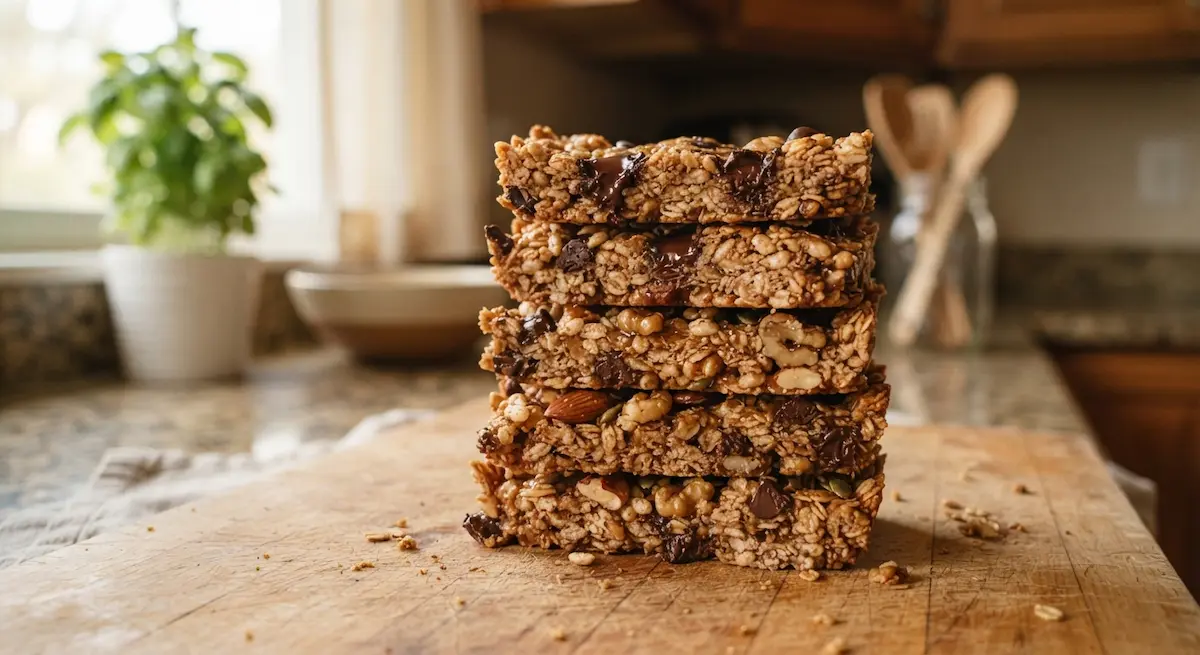
Chewy Granola Bars: An Easy Homemade Snack
If you’ve ever grabbed a granola bar off a shelf, checked the label, and quietly put it back — you’re not alone. Somewhere between “healthy snack” and “candy bar in disguise,” a lot of store-bought bars lose the plot. This chewy granola bar recipe was built to fix that, without pretending sugar doesn’t exist.
I remember the night before a cardiology exam in med school, running on four hours of sleep and a gas-station granola bar I grabbed because it was faster than thinking.
Forty-five minutes into the exam, I crashed — hard. My hands were shaky, my focus was gone, and I spent the rest of the test fighting my own blood sugar instead of the material.
It wasn’t until years later, deep into clinical rotations and pulling six-hour shifts on protein bars and vending-machine snacks, that I actually sat down and reverse-engineered what a granola bar needs to do for your body, not just taste like. That’s where this chewy granola bar recipe came from — not a lab, not a marketing meeting, just a tired med student trying to stop crashing.
Table of Contents
Doctor’s Note: Why This Recipe Matters
Here’s the short version, in plain language: this chewy granola bar recipe is built around one goal — keeping your blood sugar steadier for longer, without cutting out sweetness altogether.
The oats do much of the work. Rolled oats contain a soluble fiber called beta-glucan, which forms a thick, gel-like substance in your digestive tract. That gel slows down how quickly food moves through your stomach and how fast sugar hits your bloodstream — which is exactly why oats show up so often in conversations about blood sugar management, according to research summarized by the Mayo Clinic and the NIH’s National Institute of Diabetes and Digestive and Kidney Diseases.
The same beta-glucan also binds to bile acids in your gut, which nudges your liver to pull more LDL cholesterol out of circulation to make new bile acids — part of why oats carry a heart-health reputation backed by the American Heart Association.
But here’s the part most “diabetic-friendly” recipes skip: this isn’t a sugar-free chewy granola bar recipe, and it was never meant to be. It uses a small amount of honey, paired deliberately with protein and fat from nut butter. That combination matters more than the amount of sugar alone.
Fat and protein slow gastric emptying and blunt the glucose spike that plain sugar causes on its own — a principle behind why the glycemic index of a food can shift dramatically depending on what it’s eaten with, not just what it’s made of. So instead of fearing the honey, this recipe manages it. Think of it less as removing sugar and more as giving it an escort.
The Chemistry of a Chewy Bar (Not Just a Recipe — A Ratio)
Why “chewy” is a texture decision — and a blood sugar one
A lot of homemade granola bars go one of two ways: either they’re baked hard and crunchy, loaded with enough sugar to caramelize properly, or they fall apart into crumbs the second you unwrap them.
The chew in a good chewy granola bar recipe comes from moisture and binder ratio, not sugar concentration. That’s actually good news for you — it means you can dial back the added sugar without sacrificing the texture that makes a granola bar satisfying in the first place.
The Balancing Formula: Oats, Healthy Fats, Protein, and a Touch of Sweetness
I like to think of this chewy granola bar recipe as a kind of buffer system, borrowing a bit of biochemistry language. In chemistry, a buffer resists sudden swings in pH by absorbing shocks rather than blocking them outright. This recipe works the same way with sugar:
- Oats act as the fiber scaffold — the structural backbone that slows everything down.
- Nut butter provides the fat-and-protein brake, which is what actually blunts the sugar spike.
- Honey is the flavor payload, kept intentionally small.
- Flaxseed or chia adds a second layer of soluble fiber and a bit of extra binding power.
None of these ingredients does the job alone. It’s the combination — the buffer — that makes this chewy granola bar recipe behave differently in your body than a bar built on refined flour and syrup.
Ingredients & Why Each One Matters
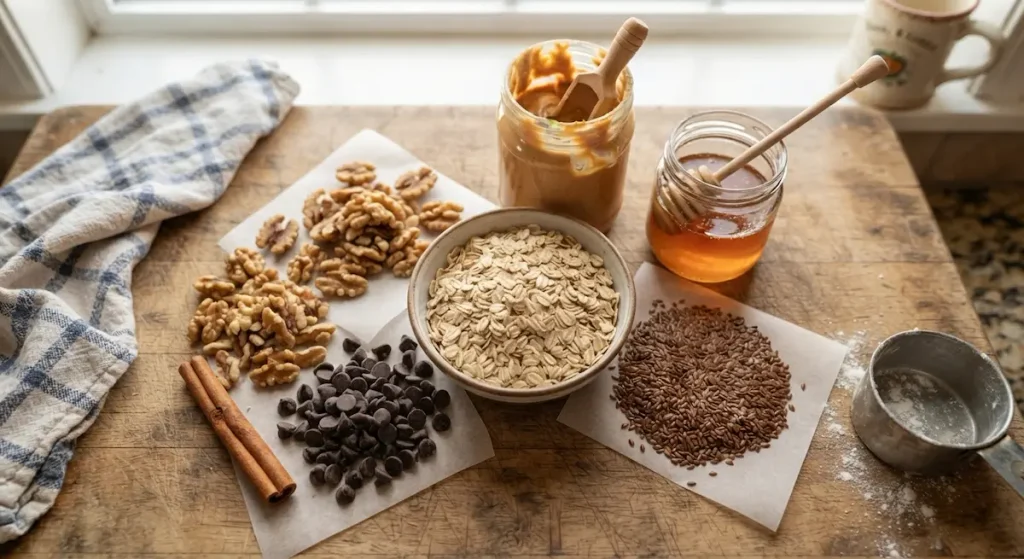
This isn’t a recipe where you can swap everything freely and expect the same result — each ingredient in this chewy granola bar recipe is doing a specific job.
| Ingredient | Amount | Role in the Recipe |
| Rolled oats | 2 cups | Soluble fiber (beta-glucan), structural base |
| Natural peanut or almond butter | 1/2 cup | Protein + fat, slows sugar absorption |
| Honey (or pure maple syrup) | 1/4 cup | Binder, minimal added sugar |
| Ground flaxseed or chia seeds | 2 tbsp | Extra fiber, omega-3s, helps binding |
| Unsweetened applesauce | 1/4 cup | Moisture, mild natural sweetness |
| Ground cinnamon | 1 tsp | Flavor; some early research links it to modest insulin-sensitivity effects |
| Chopped walnuts or almonds | 1/3 cup | Unsaturated fats, texture, heart-health support |
| Dark chocolate chips (70%+) or unsweetened dried cranberries | 2 tbsp | Optional flavor, kept to a controlled portion |
| Salt | 1/4 tsp | Balances sweetness |
If you want to adjust this chewy granola bar recipe further, date paste can stand in for honey for an even gentler sugar profile, and sugar-free chocolate chips work if you’re tracking carbohydrates closely. Neither swap is required — the recipe as written is already built around moderation, not elimination.
How to Make Chewy Granola Bars, Step by Step
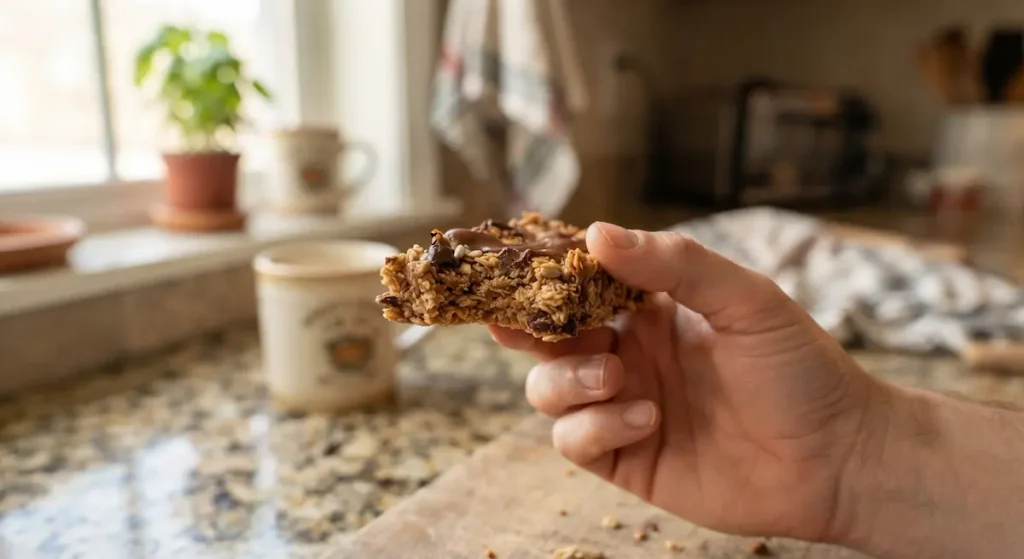

Toast for flavor, not sugar
Spread your oats and chopped nuts on a baking sheet and toast them at 350°F for about 8 minutes, stirring once. This step builds real flavor through browning instead of leaning on extra sugar to compensate for blandness — a small trick that makes a big difference in how satisfying this chewy granola bar recipe tastes without adding a single gram of sugar.
Warm the binder gently
In a small saucepan, warm the nut butter, honey, and applesauce over low heat just until they loosen and combine — you’re not trying to boil or caramelize this mixture. Gentle warming keeps the binder smooth without concentrating the sugar, which matters if you’re being deliberate about how this chewy granola bar recipe affects your blood sugar response.
Combine and press firmly
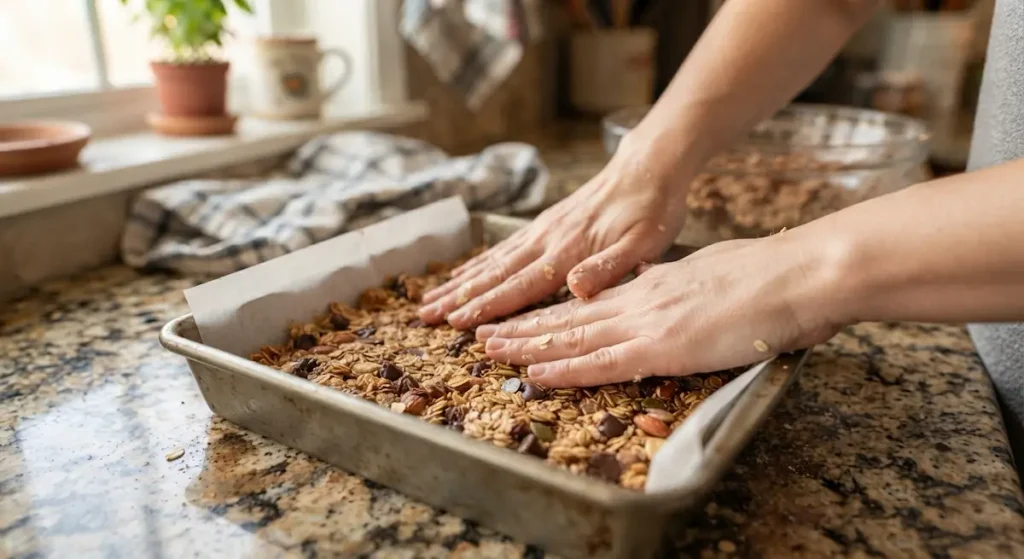
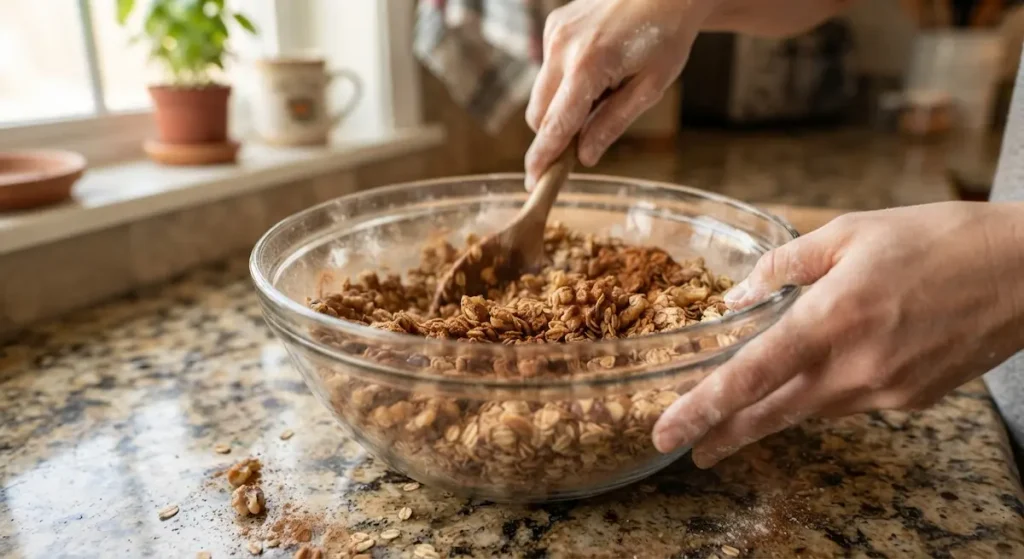
Stir the toasted oats and nuts into the warm binder along with the flaxseed, cinnamon, and salt. Fold in your chocolate chips or dried fruit last, so they don’t melt or clump. Transfer the mixture to a parchment-lined 8×8 pan and press it down firmly and evenly — firm pressing is what gives you clean, chewy bars instead of crumbly ones.
Chill, then slice
Chill for at least two hours before slicing. Slice into 12 even bars. That portion size isn’t arbitrary — consistent portioning is itself a blood sugar management tool, because it keeps you from unintentionally eating a “bar” that’s actually three servings.
The Nutrition Breakdown
Nutrition Facts (Per Bar, 12 Servings)
| Nutrient | Amount |
| Calories | ~150 kcal |
| Protein | 5 g |
| Total Carbohydrates | 17 g |
| Dietary Fiber | 3 g |
| Total Sugars | 6 g |
| Added Sugars | 5 g |
| Sodium | 45 mg |
| Total Fat | 8 g |
What these numbers actually mean for you
Five grams of added sugar sounds small on its own, but the context is what makes this chewy granola bar recipe work the way it does. That sugar isn’t traveling alone — it’s riding along with 5 grams of protein, 8 grams of fat, and 3 grams of fiber, all of which slow its absorption. That combination is a big part of why this recipe fits comfortably into a blood-sugar-conscious eating pattern, even though it isn’t sugar-free.
Which Diets This Recipe Fits
This chewy granola bar recipe was designed with a few specific goals in mind:
- Diabetic-friendly / low-glycemic-load — thanks to the fiber-fat-protein combination slowing sugar absorption
- Heart-healthy — soluble fiber and unsaturated fats work together to support healthy cholesterol levels
- High-fiber — from both oats and flax or chia
- Low-sodium — no added salt beyond a small pinch for flavor
To be clear: this is not a sugar-free or zero-carbohydrate recipe, and it isn’t trying to be. It’s built for moderation and pairing, not elimination.
Frequently Asked Questions
Do people with diabetes have to avoid oats entirely?
No — and this is one of the more persistent myths around blood sugar management. Whole rolled oats have a meaningfully different effect on blood sugar than instant, pre-sweetened oat packets. The difference comes down to processing and fiber content, not oats as a category. A chewy granola bar recipe made with whole rolled oats and healthy fats behaves very differently in your body than a sugary instant oatmeal packet.
Can I make this chewy granola bar recipe completely sugar-free?
You can reduce the honey further or swap in a sugar-free syrup alternative, but keep in mind that a small amount of real sweetener, paired with fat and protein, is part of what makes this recipe work the way it’s designed to.
How many bars can I eat if I’m managing blood sugar?
That depends on your individual carbohydrate targets, which is exactly the kind of thing to work out with your doctor or a registered dietitian rather than a blog post. One bar as a snack is a reasonable starting point for most people.
Do dried fruits belong in a diabetic-friendly recipe?
In small, controlled amounts — yes. The concern with dried fruit isn’t the fruit itself, it’s portion size, since drying concentrates natural sugars. Two tablespoons spread across twelve bars is a very different story than a handful eaten on its own.
Can I freeze these bars?
Yes. Wrap them individually and freeze for up to three months — a convenient way to always have a blood-sugar-friendly snack on hand instead of reaching for something less deliberate.
A Note on Using This Recipe Long-Term
If you’re managing blood sugar day to day, pairing one of these bars with an additional protein source — a hard-boiled egg, a spoonful of Greek yogurt — can add even more stability, especially before a workout or a long stretch without a meal. This chewy granola bar recipe was built to stand on its own, but it plays well with others too.
Medical Disclaimer
This article is for general informational purposes only and is not a substitute for professional medical advice, diagnosis, or treatment. If you are managing diabetes, heart disease, or any other health condition, please consult your physician or a registered dietitian before making significant changes to your diet.
Conclusion
Managing blood sugar doesn’t have to mean giving up the foods that make eating enjoyable. This chewy granola bar recipe isn’t about removing sweetness from your life — it’s about re-engineering how that sweetness reaches your body, one thoughtful ingredient pairing at a time. The next time you’re tempted by a gas-station shelf, you’ll have something better waiting at home.
Made this recipe? I’d love to hear how it turned out — drop a comment below with any tweaks you made, and if this chewy granola bar recipe helped you rethink snacking, share it with someone who could use it too. And if you want more recipes built around real medical reasoning (not just food-blog trends), subscribe to the DocCuisine newsletter — new “Food first, medicine second” recipes land in your inbox every week.
What Readers Think :
There are no reviews yet. Be the first one to write one.
